

Mention spring flowers in the Cape and most people immediately think of Namaqualand. But there is another flowering season, further south in the Klein Karoo, that is far less known and quite different in character. After good winter rains the dry veld begins to change, and this year Aardvark Bioreserve is experiencing its strongest flowering since the 2014/15 season.
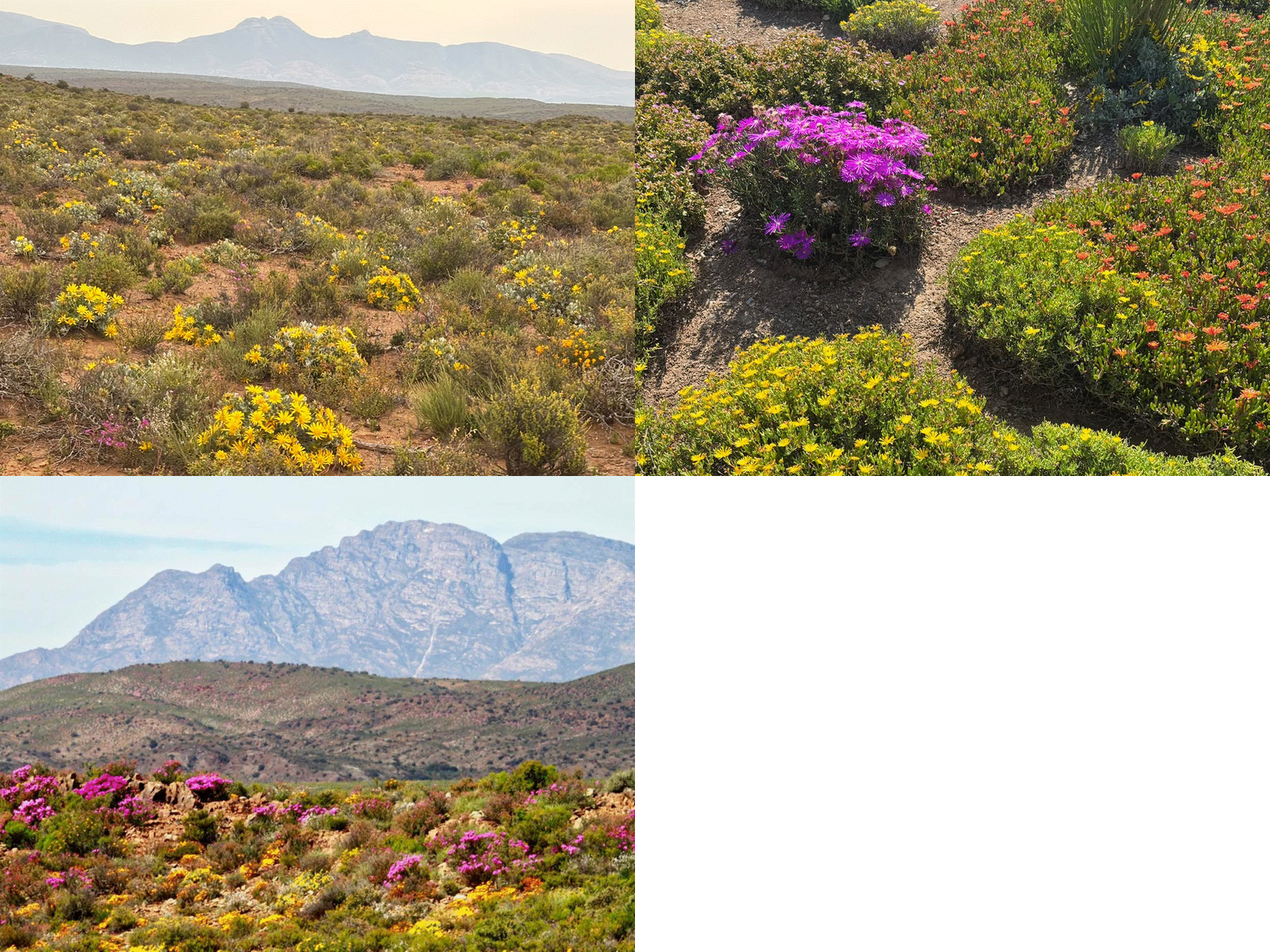
For much of the year this is a restrained landscape of stony and skeletal earth, low Karoo shrubs, rocky slopes and distant mountains. In summer especially, it can seem almost impossible that so much colour is waiting there. Then the winter rains do their work. Yellow, orange, pink and white begin appearing between the shrubs, succulents flower across the veld, and places that looked dry and sparse only weeks before suddenly demand a second look.
You will not find the familiar Namaqualand daisy carpets here. What makes the Klein Karoo flowering so remarkable is the diversity: many different plants coming into bloom at the same time, each appearing in its own patch of soil, rock or open veld. Even the local names give some sense of the character of the place – from the Flennie Busch and the dainty Poprosie to the wonderfully named “Voëltjies kan nie sit nie” – alongside vygies, bulbs and an extraordinary variety of flowering succulents.
Here the flowers are woven into the landscape rather than spread across it. You may see colour scattered across a whole slope, but often the real surprise is much closer: a tiny succulent flowering between stones, a bulb pushing through ground that looked completely bare, or several different species flowering within a few metres of one another. Once you start noticing them, it becomes difficult to keep walking at the same pace.
That is how the Klein Karoo works. The region is exceptionally rich in succulent plants, many adapted to very specific combinations of soil, geology and rainfall. Some occur naturally across surprisingly small areas, which means that what looks fairly uniform from a distance can hold remarkable botanical variety when you get down into the veld and look properly.
The strength of this year’s flowering at Aardvark makes that hidden richness much easier to see. Walks take longer, not because the terrain has changed, but because you keep stopping. One plant catches your eye, then another, and before long the landscape that first appeared muted and dry begins to reveal just how much is happening within it.
There is also a more serious side to the flowering. Some of South Africa’s rare and highly localised succulents are vulnerable to illegal collecting. Seeing them growing and flowering where they belong is a reminder that conserving these plants means protecting the soils, rocks and wider landscape around them too.
Namaqualand will quite rightly remain the Cape’s most famous flower country. But the Klein Karoo has a flowering season of its own: less about one dominant flower and more about an extraordinary diversity coming into bloom together. This year at Aardvark, that difference is hard to miss.

Contact
The Aardvark Bioreserve is located in the Brandrivier area of the Klein Karoo, situated on the R323 road between Ladismith and Riversdale in the Western Cape, South Africa.
Visit aardvarkbioreserve.com or click here with specific questions.
Note on Conservation
Raising awareness around succulent poaching remains crucial to protecting South Africa’s unique plant heritage. Aardvark encourages the public to remain vigilant and to avoid purchasing succulents from unregistered nurseries or questionable sources. By making responsible choices as consumers, you can help curb the illegal trade and protect these vulnerable plants for future generations.