

In wine as in fashion, tastes come and go. And right now, says EMILE JOUBERT, the taste is for light, cool and fresh.

THE CURRENT WORLDWIDE concern over a marked drop in wine consumption over the past year or two might raise questions, but can hardly be seen as a surprise. Changing consumer patterns have been a feature of the wine world ever since fermented grape juice was first imbibed in Georgia some 8 000 years ago. The annals of vinous history are awash with the somewhat schizophrenic relationship between humans and wine.
In South Africa alone, wine tastes and preferences have shifted startlingly over the past six decades. Before the 1970s, most of the wine consumed in the country was sweet, much of it fortified in the form of Muscadel, Jerepigo and Port. Then came new technology that allowed for the production of dry white wine, with tastes veering to the less sugary side. This ran parallel to a massive increase in the popularity of dry red wine, which some 50 years ago was limited in both production and consumption.
Since the 1980s, buoyed by the energy and opinions of wine marketers and journalists, the population’s taste for fine wine has favoured dry white and red, stimulating a heady increase in the number of independent cellars. When the Stellenbosch Wine Route was founded in 1971, it mustered some 20 member cellars. Today there are close to 200.
Over the past few decades, producers have been spoilt by their customers’ keen engagement with refined Cabernet Sauvignon, steely Sauvignon Blanc, charmingly fruited Chenin Blanc and powerful Pinotage. But tastes do not remain static.
Younger generations today are spoilt for choice when selecting a drink. While their parents’ and grandparents’ options were largely limited to wine, beer, whisky or brandy, today’s consumers have a plethora of ciders, spirits and fizzy fermented coolers to choose from. These modern imbibers see no reason to inherit the values of forebears for whom wine – and the drinking of it – was elegant, cultured and mannered. Instead, today’s generation throw themselves with wanton abandon into a world of diverse drinking options, unshackled by the fashions and trends of generations past. This is why global wine consumption is slackening pace. And also because many people, young and old, simply do not see alcohol as conducive to their preferred lifestyle.
Red wine, in particular, is experiencing an acute slump. The tannins are deemed obtrusive and scratchy for those starting out on a life of responsible alcohol enjoyment. Wines made from certain grapes carry a harsh and unappealing grip on the finish. And how can a drink be appealing if it is meant to be sipped at room temperature? Hold the lukewarm Shiraz and pass the icy lime-vodka spritzer – which, in any event, looks cooler on Instagram than a glass of purple-red liquid.
This does not, however, mean the case for red wine is lost. There are enough of us – and will be for some time – whose enraptured relationship with a glass of aged Cabernet Sauvignon or single- vineyard Merlot will continue unabated. But what is already evident among new- and old-generation wine drinkers is that lighter, fresher red wines are gaining traction. Fast. And if that bright, fruity red can be chilled, so much the better.
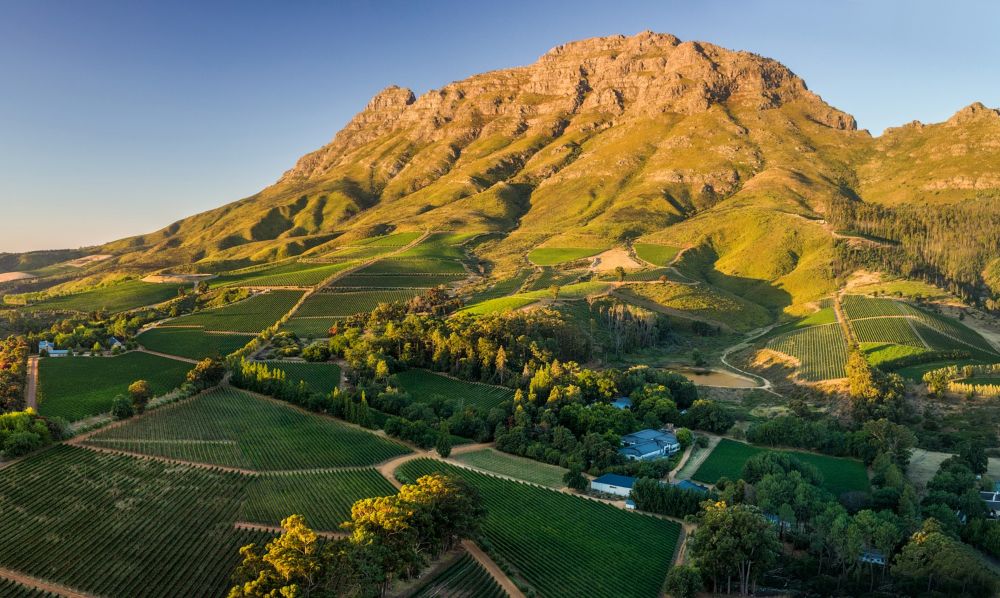
Looking at this shift in red wine preference, it is interesting how the wheel turns. Take Cinsaut (also spelt Cinsault), which for a long time was known in South Africa as Hermitage. For over a century this was the country’s most widely planted red variety yielding voluminous tonnages and growing like the clappers in almost any farmable environment. Cinsaut was primarily used for distilling into brandy and other spirits and, as interest in dry red wine grew, it was deployed in the making of large commercial brands such as Tassenberg.
In the 1990s, however, Cinsaut was deemed unfashionable and thousands of hectares were pulled out and replaced with more internationally acceptable cultivars such as Shiraz, Cabernet Sauvignon and Chardonnay.
Today, Cinsaut is more in fashion than the latest Taylor Swift lipstick shade. Hipster young-gun winemakers are reinventing it as a serious red grape, while sharp traditional producers with an eye on the market are including it in their portfolios. The Cape is stepping back into the light, and it is doing so with a charm and ease perfectly attuned to how we actually want to drink wine now.
At its best, Cinsaut is all about drinkability, largely due to its humungous berries, which result in a lower skin-to-juice ratio. This makes it light on its feet, generous without being clumsy and almost disarmingly accessible. Alcohols are modest, tannins gentle and the wines invite another glass long before you’ve finished the first. It is gluggable – said with respect, as in my book gluggable equates to enjoyment and that is what counts in wine.
South African examples, particularly from old bush vines in the Swartland, Darling and parts of Stellenbosch, offer joyous fruit expression: ripe red cherry, strawberry pastille, pomegranate and a touch of rose-petal perfume. There’s often a subtle savoury edge – a dusting of fynbos or dried herbs – that keeps things interesting without complicating the message. Being lighter, fruitier and less tannic, Cinsaut can, and should, be chilled. Slightly, or even to the same temperature at which white wine is served.
Falling into the same stylistic category, but with a more noble pedigree owing to the classic wines made from it in Spain and Australia, is Grenache. Add a ‘Noir’ to the name, as there is also a white version, although red is far more common.
Like Cinsaut, Grenache’s ancestral home is the south of France and it is, somewhat harshly, often referred to as the ‘poor man’s Pinot Noir’.
Grenache has always struck me as the extrovert at the Cape wine party: generous, warm-hearted and utterly uninterested in intellectual posturing. It is a grape that wants to be drunk, not studied under fluorescent light, guidebook in hand, or locked away in a cellar like some brooding heirloom. In South Africa, where sunshine is a given and wine freshness something we’ve had to relearn, Grenache feels increasingly at home.
Again, with this grape it is about drinkability. At sensible alcohols and with a light hand in the cellar, Grenache delivers wines you can open on a Tuesday night without ceremony or guilt. There’s an ease to it, a flow; a sense that the wine meets you halfway rather than demanding reverence. Too often we equate seriousness with severity. Grenache politely disagrees.
Flavour-wise, Cape Grenache revels in delicious red fruit: wild strawberry, cherry, raspberry pastille, sometimes edged with that dusty herbal fynbos note that anchors it firmly in place. The tannins are gentle, the acidity inviting and the overall impression is one of succulence and agreeable flow rather than cobbled structure.
WINES WORTH SEEKING OUT
Rustenberg Grenache Noir
As one of Stellenbosch’s oldest and most revered wine estates, Rustenberg is a property whose every wine can be relied upon to offer exceptional quality and palpable class. The wines made here on the Simonsberg may be red or white, but they are all blue-blooded, expressing Rustenberg’s cool aspects and soils of ancient, decomposed granite.
The wine is fermented in stainless steel tanks and then sent to older, seasoned French oak barrels to age for 13 months. Grenache, by nature, prefers older wood and, in certain instances, no wood at all, allowing it to unleash its mêlée of flavours without exposure to brash new oak.
As far as Cape Grenache goes, I would describe this wine as extraordinary; the cooler environment appears to concentrate and contain the grapes expressive sensorial character, which is then unleashed with vigour during vinification and ageing.
Expect perfume in a fine Grenache, and here you’ll find violets and dry fynbos with an undertone of fresh mushroom.
In the mouth, sour cherries meet mulberry and thyme, with a scintillating savoury note that will increase as the wine ages. Even in its youth, the wine is silky and sensual, reverberating with energy and guile into a truly gorgeous glass of red wine. If you are not hooked on Grenache yet, Rustenberg will haul you in.
Thelema Grenache
The Grenache grape may have found a reputable home in the Cape’s warmer regions, such as the Piekenierskloof outside Citrusdal, but – like Rustenberg – Thelema shows that Stellenbosch can make any varietal expression its own. Singular. Distinctive. Classy. Profound.
Also on the Simonsberg but with greater sun exposure, Thelema stands true as a Stellenbosch mainstay and its Grenache, as can be expected, is as regal and profound as the property’s Cabernet Sauvignon and Chardonnay.
During vinification, care is taken to keep whole as many of the harvested berries as possible, which contributes to purity and harmony during fermentation. Maturation is carried out for 10 months in second- and third-fill French oak barrels, with one racking taking place during the period (when the wine is taken out of the barrel and then returned to it to open things up).
The nose is stern and serious, and the mouthfeel akin to a Michelangelo statue sculpted from Carrara marble. Tannins are loose-limbed yet muscular, allowing waves of deliciousness to enchant the senses and reach intoxicating levels. Ripe plums and lavender come to the fore, with an intriguing maritime run of dry oyster shell. Flavours are enhanced by the wine’s completeness. From its entrance on the palate to the long, rippling finish, the wine never wavers from its red-fruited succulence and agreeable refinement. Moreish, to the max.
Donkiesbaai Grenache Noir
With its unforgiving dry, hot climate and sandy loam soils, Piekenierskloof – about 170km north-east of Cape Town – has seen Grenache rooted in its elevated slopes for some eight decades. Subsequently, the region has gained something of a reputation as ground zero for Grenache.

The Donkiesbaai label – owned by Rust en Vrede’s wine Don Corleone Jean Engelbrecht – offers a superb example of Piekenierskloof Grenache, underscoring the variety’s ability to perform extremely well in hot conditions. Berries from the warm, dry area are smaller, the fruit more concentrated. It’s intense stuff, visceral in its interpretation of the Grenache ethos.
In the cellar, 15% of the grapes are fermented as whole clusters, a practice that provides a kick of cool freshness. Maturation takes place in old 500L barrels for 14 months, the larger format minimising wood influence while ensuring that structure and poise are maintained.
The result is a flirtatious, sun-drenched wine with commanding presence, leading with a typical and highly discernible Grenache personality: blood and cherry blossom on the nose and an earthiness on the palate that explains the occasional comparisons between Grenache and Pinot Noir. Yet there are flowing, glowing, gushing dark and red berries wrapped in an enigmatic grasp of broad, airy tannins.
Craven Cinsaut
Mick and Jeanine Craven sit at the edge of the hipster category of Cape winemakers: sincere, personable and deeply enamoured by South Africa’s viticultural and vinous heritage. They have played a part in reviving Cinsaut as an integral element of the country’s wine story, their Craven Cinsaut being a sterling example of just what a treasure this cultivar is.
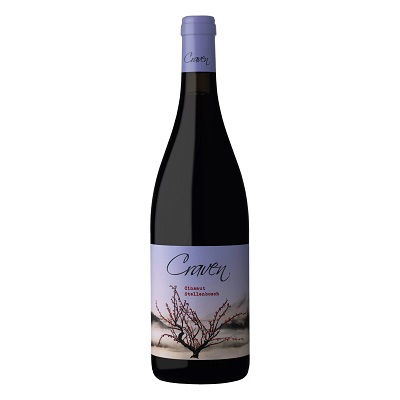
The grapes are grown near the Atlantic Ocean at Faure. The winemaking, too, is an ode to the importance of remembering things past. No wood, clay amphorae or other distractions. The wine is fermented and matured for six months in concrete tanks. Yes, the same tools used for red winemaking before small oak barrels became all the vogue in the 1980s.
Craven Cinsaut lies ruby-shaded in the glass, and from it drifts a slight cloud of fascinating aromas ranging from wild flowers to crushed rock and iron. It enters the mouth as cool and unconcerned as a Clint Eastwood saunter into a remote saloon. The flavours veer towards pine needle and dark, autumnal orchard fruit, with Maraschino cherry and sappy plums leading the way.
Craven Cinsaut lies ruby-shaded in the glass, and from it drifts a slight cloud of fascinating aromas ranging from wild flowers to crushed rock and iron. It enters the mouth as cool and unconcerned as a Clint Eastwood saunter into a remote saloon. The flavours veer towards pine needle and dark, autumnal orchard fruit, with Maraschino cherry and sappy plums leading the way. The mouthfeel is gushing and juicy rather than silky and calm, with a hit of forest-floor brooding in the background. History and taste in a mouthful. What’s not to like?
Lanzerac Keldermeester Versameling Kurktrekker Cinsaut
This wine sits within Lanzerac’s definitive Keldermeester range, and quite rightly so. It’s proof that when you take Cinsaut seriously, it responds with profound eloquence and can, quite honestly, deliver a wine of world-class stature.
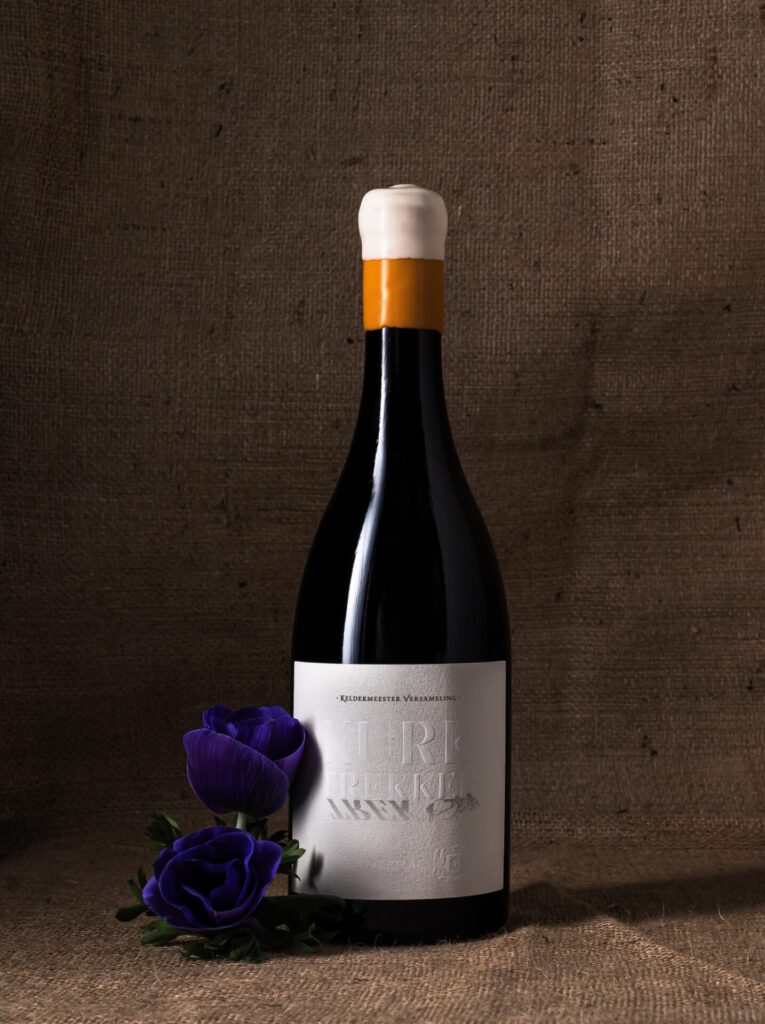
Named after the corkscrew-shaped mountain route linking waterfalls in the Jonkershoek Valley, the wine twists and turns with equal intrigue. Lanzerac wine maestro Wynand Lategan has crafted something genuinely special here: 100% Cinsaut from a young 2021 planting in the valley, treated with the reverence usually reserved for noble varieties. Whole-bunch fermentation in open fermenters, gentle basket pressing and a year in older French oak; these aren’t shortcuts, but winemaking with intention.
The result is as profoundly satisfying as it is admirable. A delicate floral nose, edged with earthy undertones, draws you in with an alluring whisper of secrets, dreams and tales of valleys and kings.
On the palate, the wine reveals its true character: silky tannins that glide across the tongue, a depth of flavour that belies the variety’s reputation for lightness, and a finish that lingers with quiet insistence. What strikes me most is the wine’s balance, the interplay between elegance and substance, between immediacy and ageing potential.
The high natural acidity provides a backbone that promises development over the next decade, yet there is an accessibility now that makes waiting feel optional rather than mandatory.
Fryer’s Cove Grenache Cinsault
Talking of Grenache and Cinsaut, why not harness the best of both worlds? Fryer’s Cove – arguably the country’s most unusual winery, located as it is in a former crayfish factory at Doringbaai, some 290km north of Cape Town – does just this with a stunning wine.
There are wines that politely ask for your attention, and then there are wines that grab you by the collar, drag you outside and make you breathe deeply whether you want to or not. This is very much the latter.
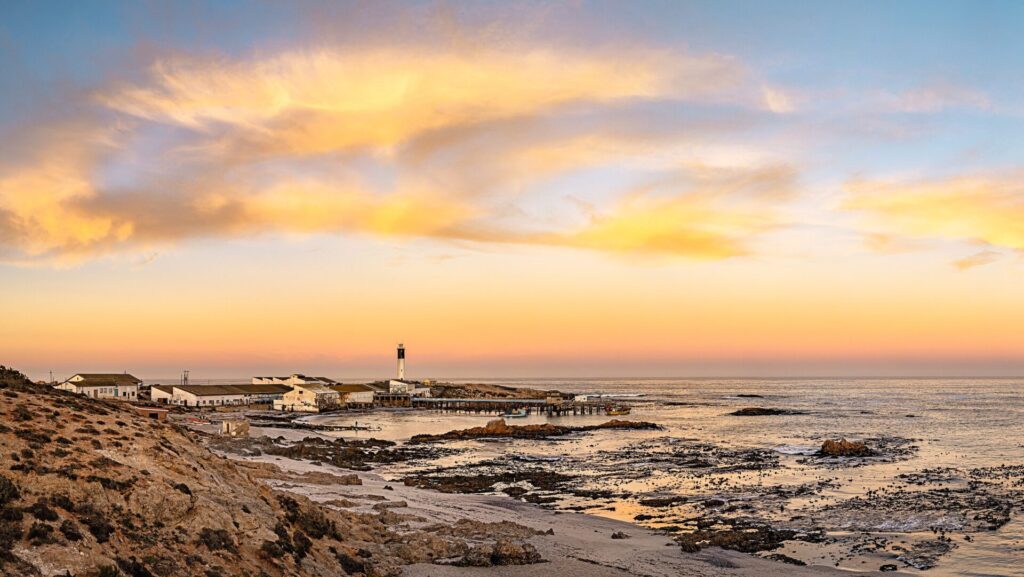
One sip in and you’re standing on a wind-lashed stretch of the Cape West Coast, boots full of sand, lungs filled with cold Atlantic air. There’s sea spray here – real, briny, unapologetic – cutting across a dark, untamed thicket of wild blackberries and sharp-edged crab apples. Not the polite, manicured fruits of supermarket shelves, but the kind that make you bleed a little when you harvest them. This wine tastes alive. Restless. Honest.
It’s a Grenache-Cinsaut that doesn’t dress up or soften its accent for anyone. Medium-bodied, sure, but don’t confuse that with lightweight. There’s structure here, bones and sinew, held together by a cool, coastal tension that keeps everything in check. The fruit is generous but never sloppy, framed by acidity that snaps like a flag in a hard sea wind. It’s complex without being clever, layered without being smug.
What I love most is that it refuses to posture. No overwrought oak, no make-up, no desperate reach for prestige. This is a wine forged of place: tempered by the sea, shaped by patience and delivered with the quiet confidence that only comes from knowing exactly what you are.
Drink it slightly chilled. Drink it with food, with friends, with laughter, or in blessed solitude. Drink it because it’s tasty, because it’s refreshing, because it reminds you that wine doesn’t have to be precious to be profound. It just has to be true.