

A stay at the new De Hoop Villa is an invitation to step into nature and out of the ordinary, says MAGRIET KRUGER.
THE BONTEBOK were the first to arrive, a one-of-a-kind welcome party for the first guests staying at De Hoop Villa. Their painterly colours – dark chestnut flanks with an aubergine swish – complemented the swirl of sunset colours in the sky. Everywhere you look at De Hoop Collection, the main base for visitors to De Hoop Nature Reserve, there is beauty to see.
Earlier, our guides and hosts, Francois and Ruda van Heerden, had officially welcomed us to the new villa with glasses of bubbly. Sleeping small parties of six in three elegantly decorated en-suite rooms, De Hoop Villa is an exclusive retreat for travellers who want to get closer to nature.

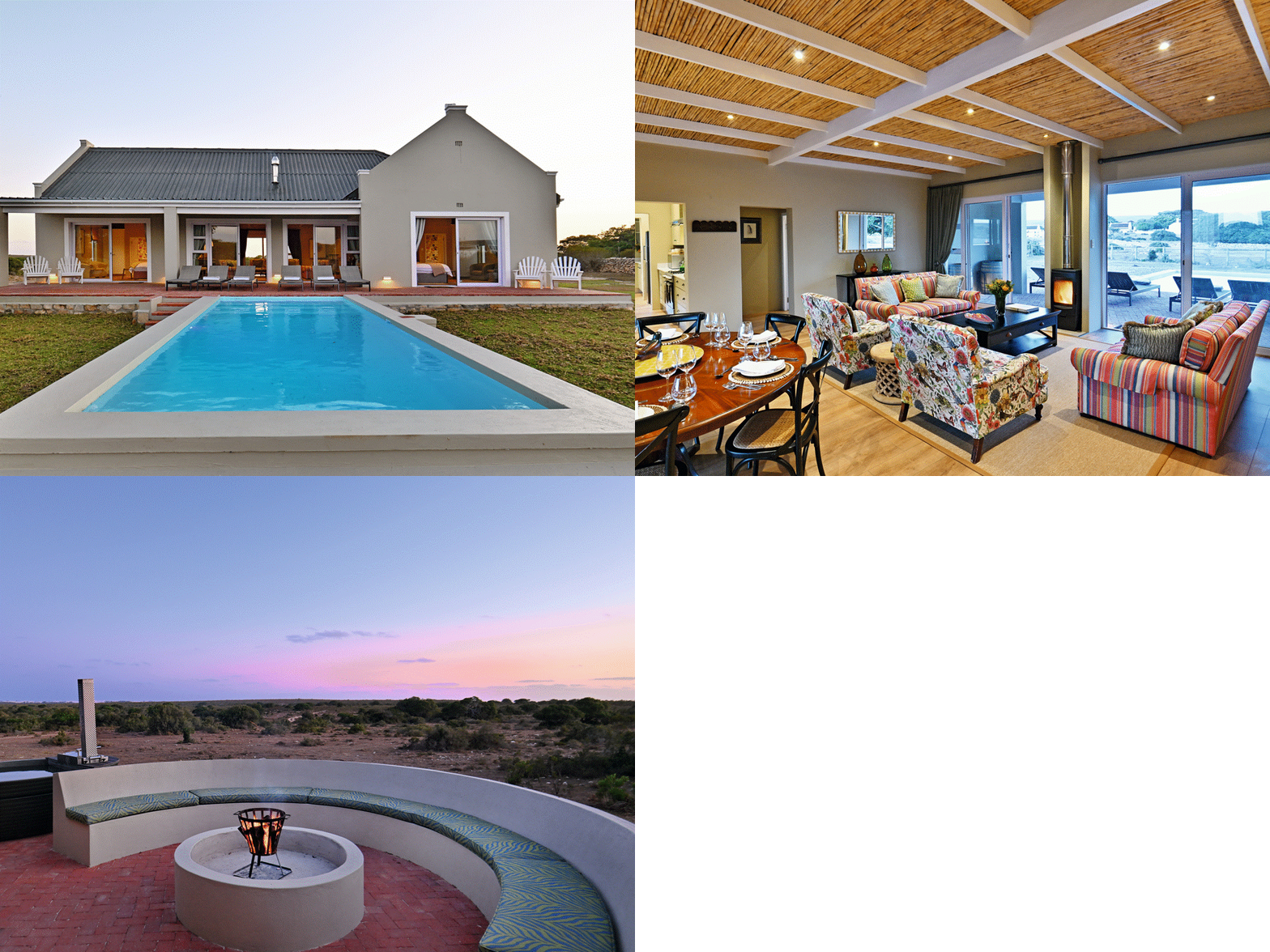
On the walls, exquisite botanical prints from the Grootbos Florilegium collection pay tribute to the region’s fynbos. In the lounge, plump sofas invite you to sink into them, setting the tone for a relaxing stay. Large glass doors bring the outside in, so you can keep an eye out for wildlife from wherever you find to be most comfortable. In the bedroom, I watched as a small grey mongoose trotted past into the fynbos.
De Hoop Villa is so thoughtfully designed, you might be tempted to stay put. When the weather is fine, you can dine out on the terrace or swap stories and s’mores around the firepit.
At the front of the villa, sun loungers frame a private pool – I’ve never before had the chance to swim with wildlife grazing nearby. There’s even a wood-fired hot tub to soak away the last of your city stress.
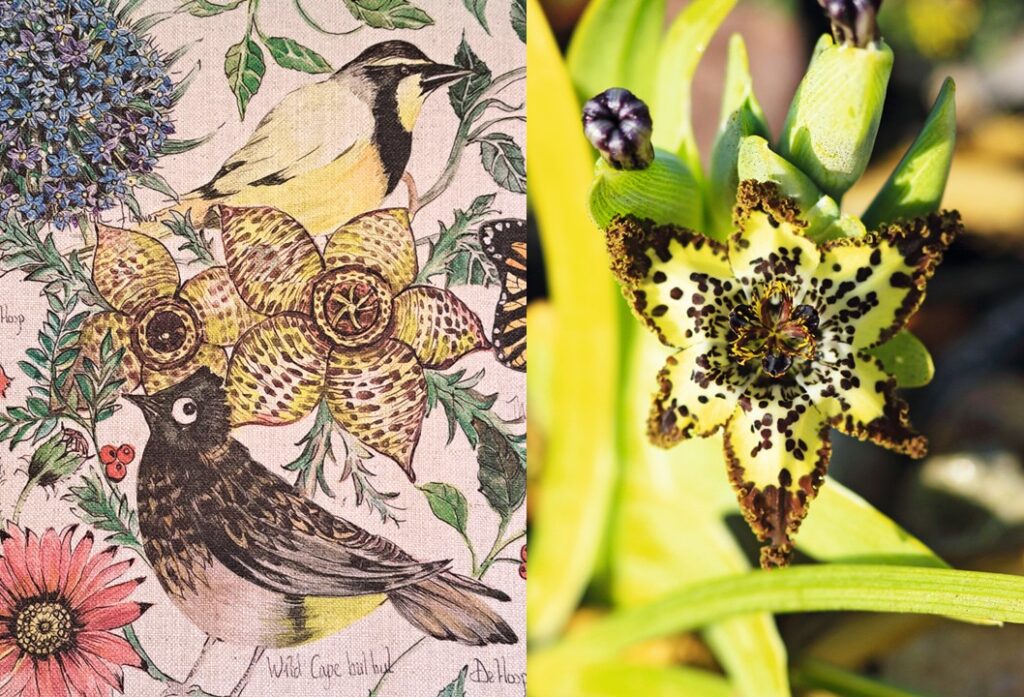
But one of the villa’s standout features will convince you to head out sooner rather than later. It’s the striking design on the wallpaper in the bathrooms and the armchairs in the lounge. The illustration is a dazzling display of some of the species found at De Hoop. An orange-breasted sunbird perches near a red pincushion. The patterns of a monarch butterfly rival the designs on a spider flower. The lime and pale pink of a leopard toad echo the colours of a water lily.
It’s the work of textile designer Karen Ellis Brown, who found that time in the reserve lit her creative spark. “Karen is a friend who needed to recharge her batteries, so I invited her to stay at De Hoop,” recounts William Stephens, the founder and CEO of De Hoop Collection, a member of Cape Country Routes. Soon the beauty and serenity of De Hoop prompted Karen to start sketching, in particular the often overlooked, but no less important, smaller creatures. “Being surrounded by nature is a truly transformative experience,” she says.
And what surroundings they are! De Hoop Nature Reserve lies in the Cape Floral Kingdom, protecting fynbos and rare renosterveld. De Hoop Vlei, a Ramsar-designated wetland, is a haven for waterbirds, attracting flamingos, great white pelicans and pied kingfishers. Up on the cliffs of Potberg, in the north-east of the reserve, the Western Cape’s last colony of Cape vultures is growing in numbers. Along the coastline, African oystercatchers find the perfect buffet in the shelf-like rock pools, while the waters annually play host to whales that journey to De Hoop from Antarctica to calve in the temperate waters.
During a stay at De Hoop Villa, you get the chance to not only experience the different faces of the reserve, but to understand what makes its inhabitants tick.
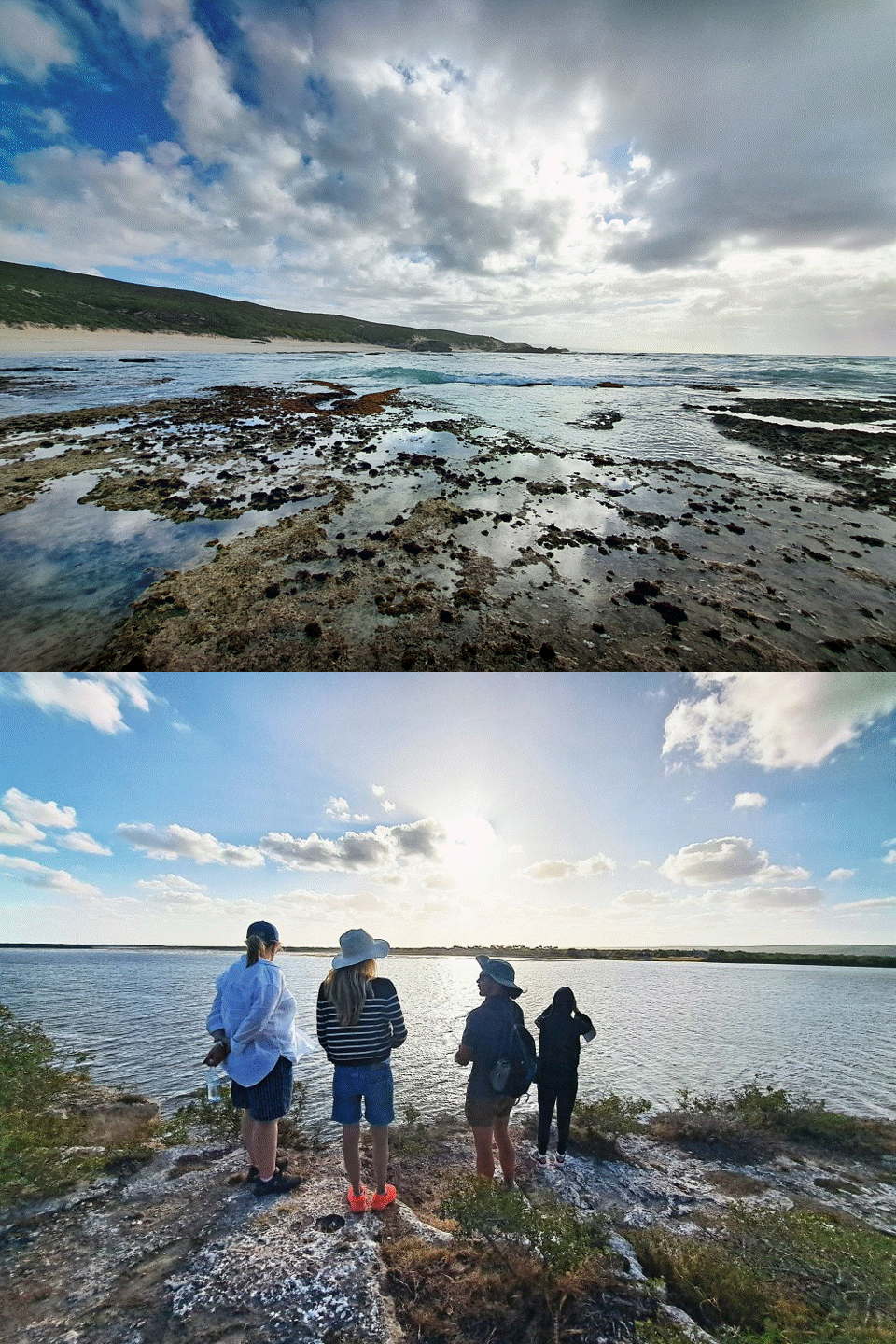
The first day, the promise of freshly brewed coffee got us up for an early morning marine walk. Truthfully, there was simply no way to resist Ruda’s excitement about exploring the rock pools shortly after dawn – the tide would be low and the forecast was for no wind. She was right; it was extraordinary to hunt along the rocky shore, the mirrored surfaces of the pools reflecting fluffy clouds above.
Ruda showed us reticulated sea stars that can regrow their limbs, a tiny shell hosting an even tinier hermit crab, velvety anemones and prickly sea urchins. The most fascinating find was a bubble-raft snail, a creature that floats on the open ocean thanks to the constellation of bubbles attached to its violet shell.
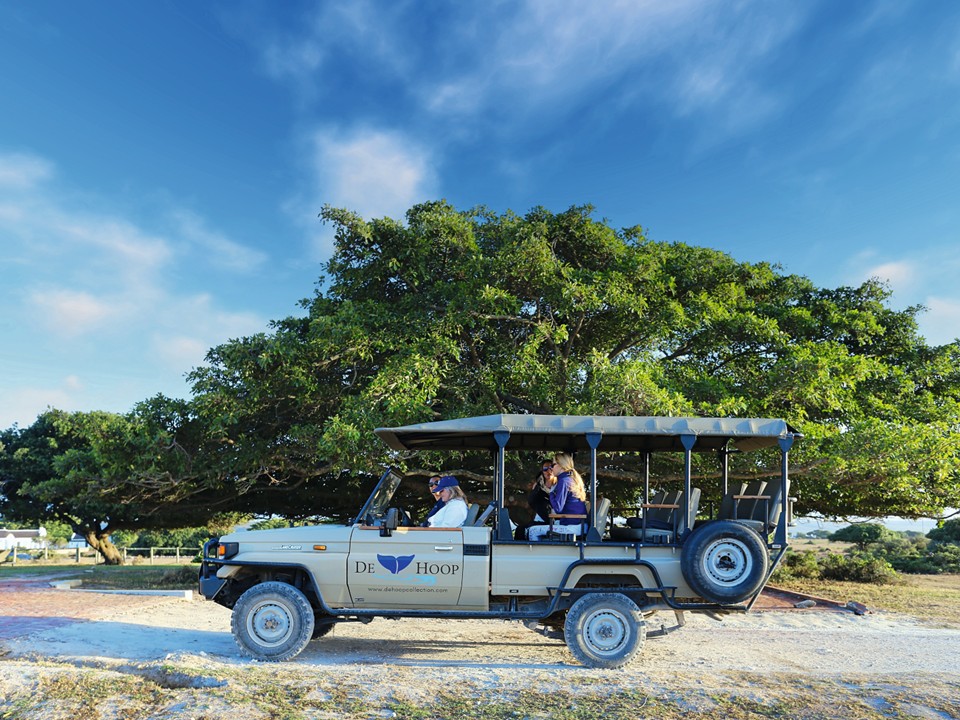
Our next outing, a nature walk with Francois, led from the villa to De Hoop Vlei and along its shore. “We’re going on a ‘sniffari’,” he joked and pointed out wild rosemary, which releases a menthol scent when the leaves are crushed. The shrub is also known as kapokbos for the white down attached to its seedheads. It’s a favourite of some bird species, like the Karoo prinia, which collect the cotton-wool-like balls to line their nests. While the birds get a soft, scented building material that dispels mites, the plant benefits by having its seeds distributed.
Back at De Hoop Villa, a decadent chocolate cake had magically appeared in time for tea – the villa comes with its own chef and caretaking team. It is one of three villas forming part of De Hoop Collection where guests enjoy guided activities and have all meals included as part of the stay. Later, chef Morné Phaff served up tender lamb potjie, a spectacular vegetable quiche and individual apple pies, among other treats.
The pace of the days was relaxed, with enough time to unwind by the pool or curl up with a book. Over a two-night stay, guests will typically head out on a sundowner game drive, an interpretive marine walk, a mountain bike tour, and a birding walk.
It’s possible to add other activities, such as an eco boat cruise on De Hoop Vlei, a trip to the vulture viewing deck or a visit to the Origins exhibit.
Formally called the Origins of Early Southern Sapiens Behaviour Exhibition, the display highlights archaeological discoveries made along the Cape south coast. From Klipdrift Shelter in De Hoop Nature Reserve, for example, there are fragments of painstakingly decorated ostrich shells that date back around 65 000 years. In fact, it was along this coastline that humankind made the giant strides in tool use and art that form the foundation of modern humans’ technological and conceptual abilities. Researchers theorise that this landscape’s abundant food supply made humankind’s intellectual development possible.
When I think of my time at De Hoop Villa, it seems that not much has changed in this corner of the country. It’s still a setting that nurtures those within its embrace, a place where the air and the water restore weary spirits. A place that inspires.
Travel Advisor
De Hoop Nature Reserve is a three-hour drive from Stellenbosch. In addition to the new De Hoop Villa, De Hoop Collection’s stable of accommodation includes the Opstal Houses and Suites, De Mond Villa, and Melkkamer Manor House. Rates for De Hoop Villa start at R6,500 per person per night, with a minimum booking of four guests. Meals and guided activities are included.
Introductory offer: Stay five nights and pay for only four until 31 August 2026. To book, call +27 21 422 4522 or email res@dehoopcollection.co.za.For more information, visit dehoopcollection.com.