

A visit to Aardvark Bioreserve has RICHARD HOLMES appreciating the stark beauty and isolation of the Klein Karoo, the luxury of the accommodation provided and, above all, the authenticity of the experience.
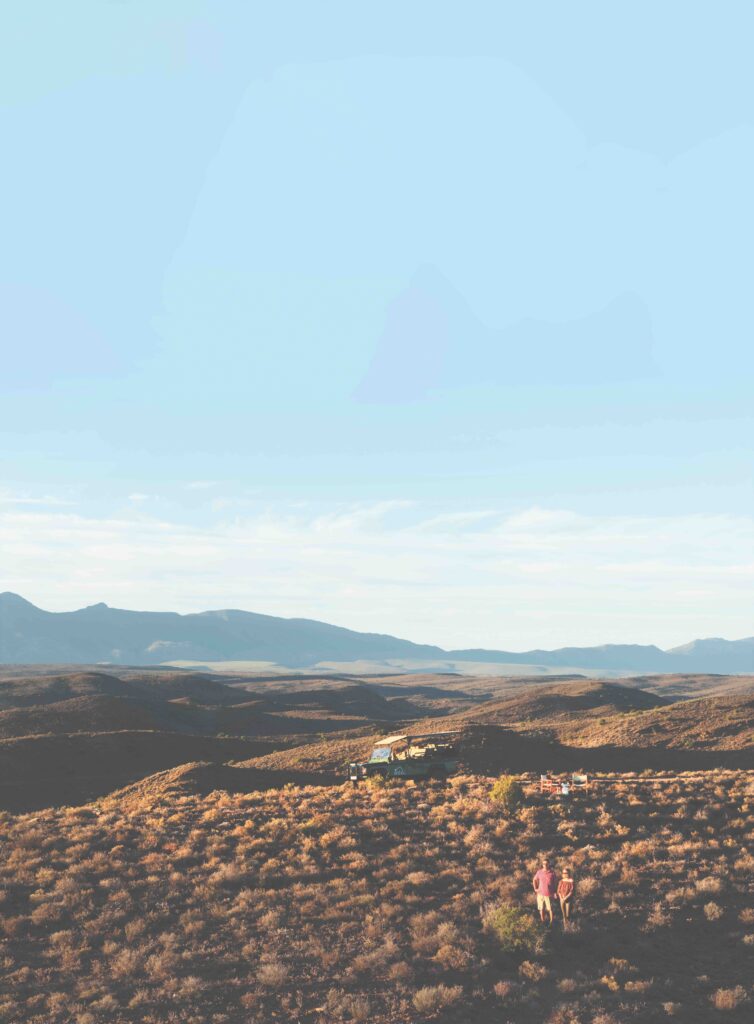
The Klein Karoo is slow to surrender its secrets. This is a sparse landscape of windswept plains and rugged hills, dry valleys and wide-open skies. Arrive in the noon shimmer of a summer’s day, or the biting cold of a winter evening, and you’ll understand why this stretch of land between the Swartberg and the Langeberg appears so uninhabited.
But stop. Look a little closer. Notice the tiny flowers bursting from succulents that have hoarded winter’s rain to sustain them through summer’s heat. The iridescent green leaves of a huilboerboon tree. Observe the jackal buzzard riding the thermals above, or the spoor left by springbok on the dusty trail. By the time sunset paints the sky in burnt orange and amber, you’ll be hopelessly in love.
At Aardvark Bioreserve, between Ladismith and Riversdale, such details are central to the experience of escape. Both a working farm and a conservation reserve, Aardvark stretches out across 5000ha of the Succulent Karoo, a biome known for its botanical richness and conservation value.
Today, the reserve blends high-end cottages with the opportunity to explore hand-carved trails across a landscape striking in its lonely beauty. While farm-style hospitality and luxury accommodation complete the picture, the Aardvark experience is shaped around a vision of restoring and protecting this remarkable corner of the Cape.
But it didn’t seem all that remarkable when Nico and Koemie Marais first arrived here in 2018. After decades abroad, working in finance across the United States and Europe, the family had long dreamt of returning to South Africa.
“We arrived here in the heat of January, as the Cape was coming out of a severe drought, and this was a very sad place,” remembers Nico. “There wasn’t a single bird. There were very few trees. It was quite depressing. But we were told, ‘You have no idea what this place can become.’”
That encouragement came from Koemie’s brother-in-law, David Zeller, a conservation expert who has worked across Africa and Asia, and who recognised the potential of this land. “We made an offer and it was accepted,” says Nico. “That’s where the journey started.”
Eight years on, it is a land transformed. The reserve has been fenced – an 18-month process – and a wildlife management plan is in place. Enormous investment in boreholes and reverse osmosis facilities has brought water to a thirsty land, while an ambitious tree-planting programme is beginning to bear fruit in the tell-tale sound of birdsong returning to the valleys.
Across the rocky hills, herds of zebra, springbok and gemsbok roam free. Set out late at night, under star-spangled skies, and you may even spot the reserve’s shy namesake.
But the real magic of Aardvark is not in its furry or feathered residents; it’s in the flora.

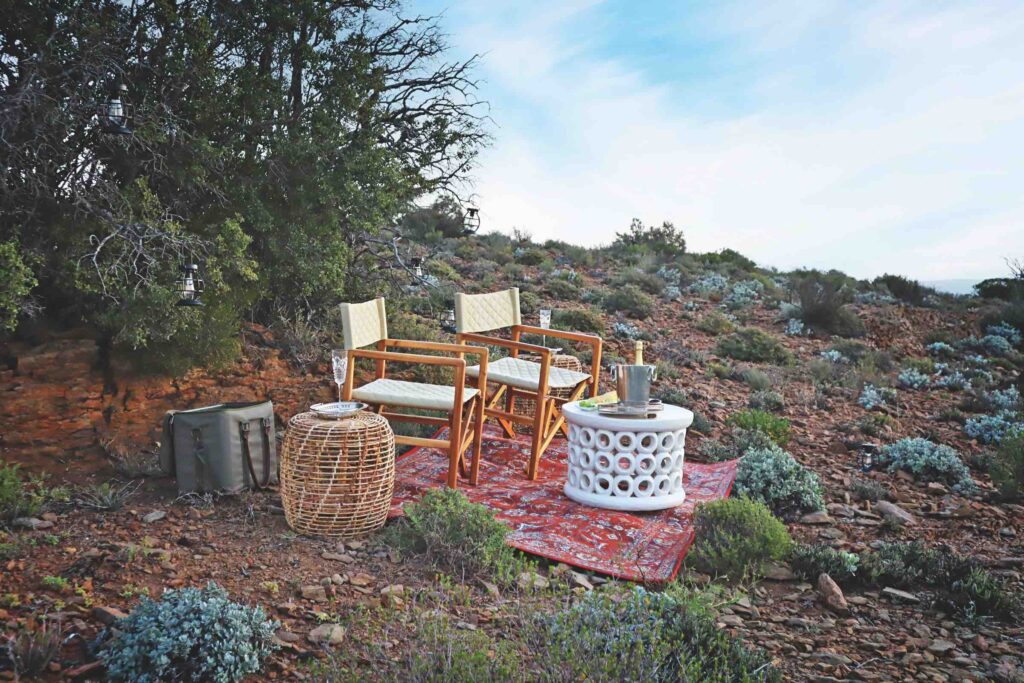
“When you start walking here, it’s a different world,” says Nico. “You can look at the landscape and think it’s just brown and dead, but this supposedly dry area is hiding extraordinary magic.”
Preserving this delicate environment and the rich floral diversity – through habitat protection, erosion control and wildlife management – is central to the conservation work on Aardvark.
Right from the beginning, Nico and Koemie knew that they wanted to share the remarkable landscapes of Aardvark Bioreserve. At first they welcomed friends and family, but slowly the hospitality offering on the property grew. Today, Aardvark Bioreserve provides a range of luxury stays aimed at families and couples looking to restore, reconnect and relish the deep quiet of the Klein Karoo.
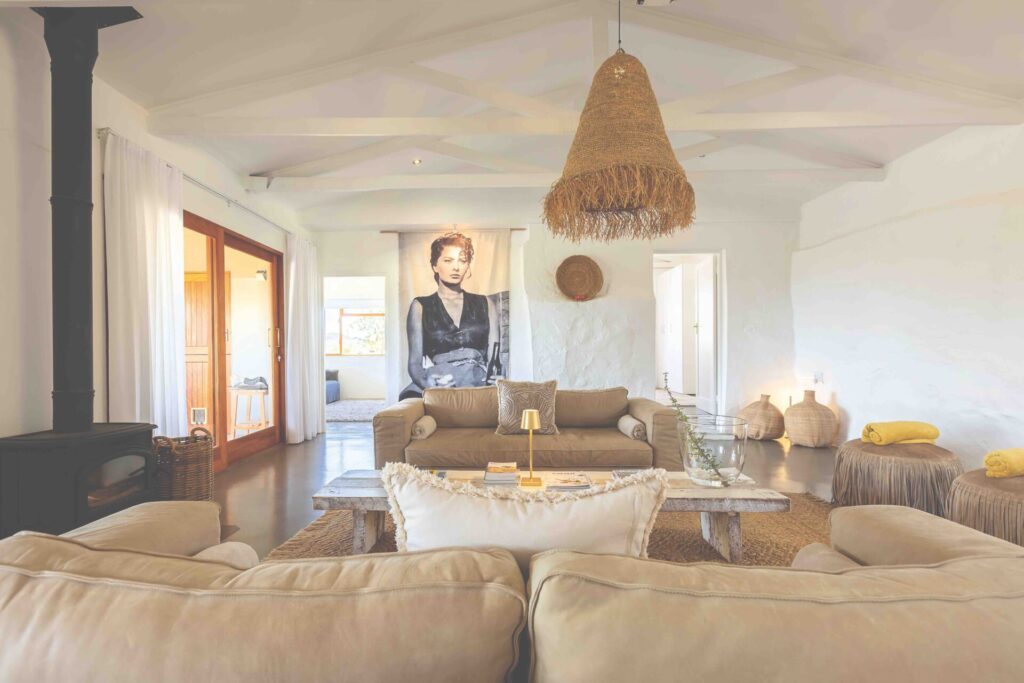
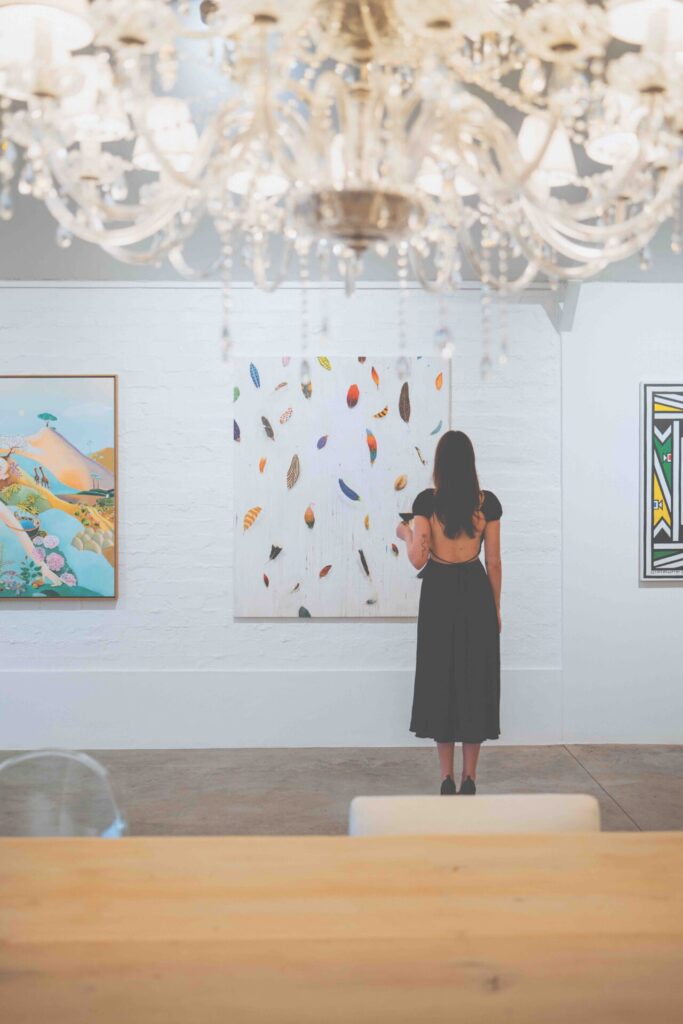
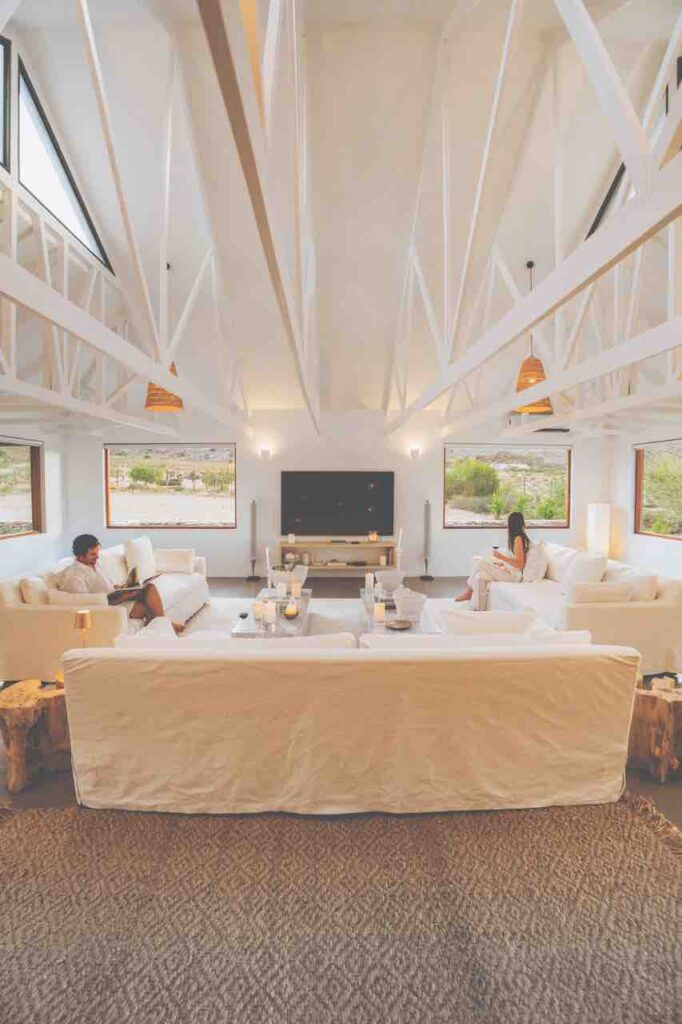
The result is a collection of cottages and farmhouses that avoid the visual cliché of many wilderness lodges in favour of a lighter, more contemporary approach filled with personal touches, splashes of colour and carefully selected artworks.
“From the start, we promised ourselves that we were going to be authentic,” says Koemie. “We were just going to be ourselves. If you like it, you like it. So all the accommodation on Aardvark is one of kind, and it’s very personal.”

Berghuisie, set on a hill overlooking Miertjieskraal Dam, is the most romantic option, with a spacious master bedroom where the views wash in through floor-to-ceiling windows. Step outside and from the private wood-fired hot tub, splash pool and sun deck you can see forever.
Springbok Cottage is also aimed at couples and comes tucked into a quiet valley between the reserve and the working farm. Die Opstal is the largest space on offer for overnight guests, sleeping eight in a restored farmhouse where large groups can come together to spend days reconnecting in the wilderness. The sophisticated Manor House – the Marais’ private home – is expected to be added to the accommodation options in 2026, offering a thoroughly luxurious stay.
For families seeking laid-back spaces, Gemsbok Cottage and Zebra Cottage are the best bets, with contemporary country-style decor and spacious terraces ideal for long evenings by the fireside.
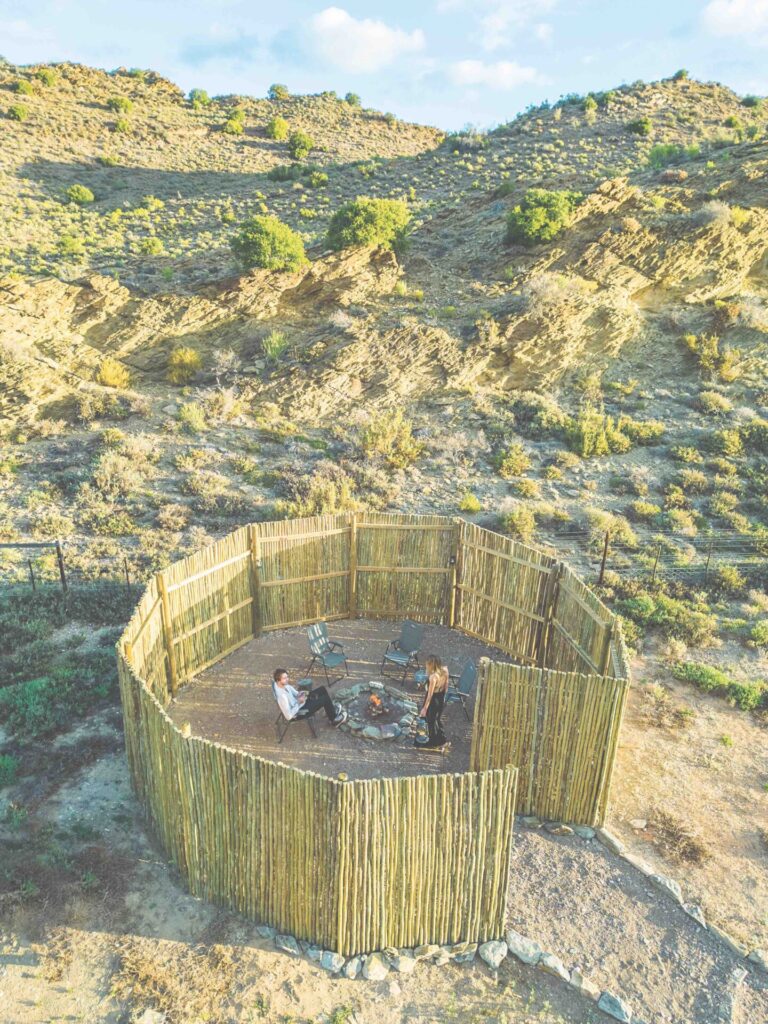
Or you could stoke the wood-fired hot tub for a session of stargazing. Both Zebra and Gemsbok are close to hiking and mountain-biking trails, so you can set off on foot or bike straight from your stoep to the trail.
And getting your feet dirty on the trail is one of the joys of a stay at Aardvark Bioreserve.
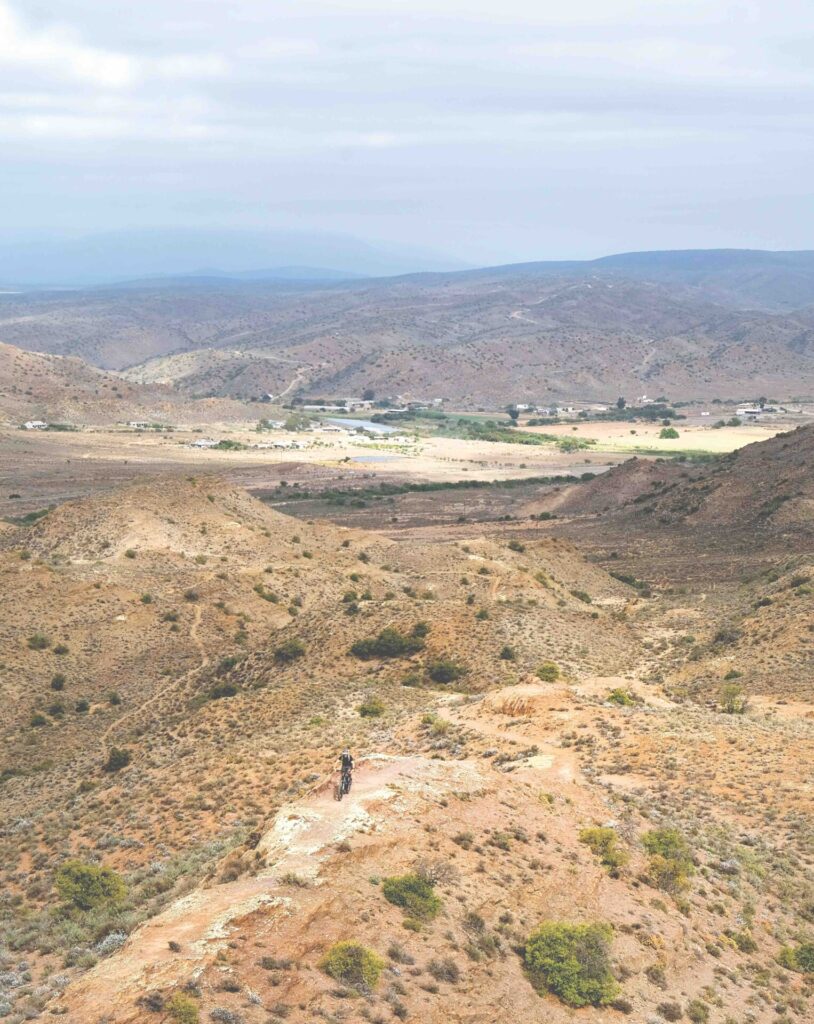
More than 100km of trails thread their way across the reserve, offering the chance to ride, run or hike through epic Karoo landscapes while keeping a keen eye out for the antelope – springbok, eland, gemsbok, and more – that thrive here.
The trails, laid out by Nico and acclaimed Stellenbosch-based trail builder Corrie Muller, range from accessible farm roads to challenging singletrack that brings a technical edge for experienced riders. Routes across the reserve are well mapped and marked, with GPS files available, and Specialized mountain bikes – electric and traditional – can be rented on the farm.
If you prefer a slower pace of exploration, specialist botanical walks can be arranged, particularly when the veld begins to flower after good winter rains. Safari-style nature drives in an open-sided Land Rover are also available for exploring more distant corners of the reserve.
If there’s a golden thread that binds Aardvark’s many attractions together, it’s a sense of authenticity. From the outdoor adventures to the considered luxury of the cottages, there is a lack of pretence and a thoughtful simplicity woven into every stay. That shows in the way food has become another thread in the Aardvark tapestry.
If you don’t want to lift a finger, wholesome premade meals – think chicken pie or fragrant bobotie – can be ordered in advance. Or guests can ask for the fridge to be stocked with organic produce, fresh vegetables and game meats from the farm, offering a true taste of the Karoo and the freedom to shape their own culinary experience, whether in the kitchen or around the braai.
The danger, as for any successful private hospitality project, is that growth could change the character of the place. Koemie is aware of that tension. There is demand for more services, more chefs, more structure. But Aardvark’s appeal lies largely in the fact that it has not become a standard lodge. For now, its direction is clear: small-scale, design-led, conservation-focused and personal. It is a place where hospitality is built around the land rather than imposed on it; where luxury comes through space, privacy, detail and the ability to slow down.
Aardvark began with a drought-stricken farm and no grand masterplan. In the years since, it has become a private reserve, a restoration project and a distinctive Karoo stay. Its success lies not in trying to compete with traditional safari lodges, but in offering something more specific: a carefully considered way to experience the Klein Karoo, shaped by personal passion and a growing commitment to conservation.