

This year, the Absa Cape Epic will return to its roots, with some seminal riding in and around Stellenbosch during the final stages. JACQUES MARAIS spoke to an Epic legend to find out why this race still commands respect and fear, and where the best spots will be to catch the action.
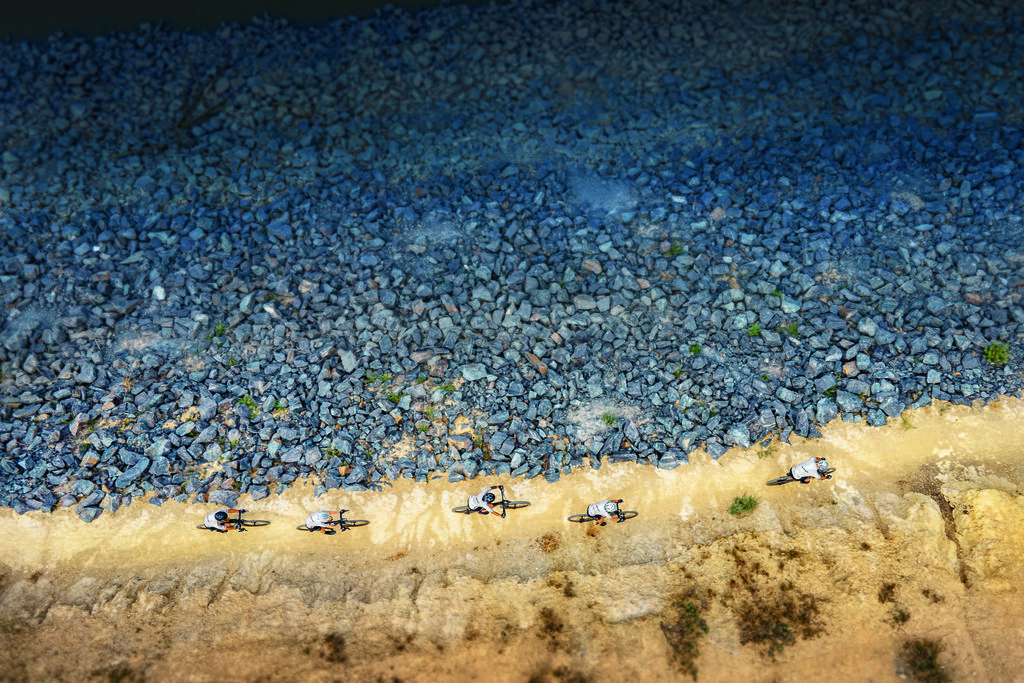
THE ORIGINAL IDEA for the Cape Epic multi-day MTB race sparked 23 years ago in Costa Rica. At the time, Kevin Vermaak was working in London and in November 2002 he decided to take a break and race La Ruta de los Conquistadores in this Central American paradise.
His on-the-ground experience of this exhilarating multi-day MTB stage race – traversing wild and exotic jungle – blew him away. Not surprisingly, during the adventure a seed was planted to replicate this thrilling high and create an African equivalent that would match the contemporary boom of multi-day mountain biking across Europe and the Americas.
Kevin returned to South Africa in 2003, intent on turning this vision into a dream. A year of hard graft and no small amount of personal risk saw him launch the first Cape Epic in 2004, on a shoestring budget and with a limited field of riders.
The gruelling race began as a point-to-point route, with Stellenbosch and the Winelands always positioned as champagne stages during the event. This is no wonder when one considers the combination of natural splendour and world-class singletrack.
By that time, Stellenbosch had become the de facto headquarters for a host of MTB world champions and Olympians, further contributing to its cachet as one of South Africa’s prime riding regions. Kevin used this as additional leverage to persuade elite athletes to enter what would soon become the undisputed ‘Tour de France of mountain biking’.

Big names like Karl Platt, Christoph Sauser and Bart Brentjens came on board – as did Absa as a major sponsor – making the event the crucible where velo heroes from around the globe came to prove themselves. Stefan Sahm from Germany was one of them, and his name became synonymous with Cape Epic success.
The Switzerland-based ‘Sahmurai’s’ record speaks for itself. Three overall victories stand as a solid benchmark, undeniably etching his influence on Cape Epic mythology. Quiet, committed and considered, Stefan denies that his success was ever built on raw power; it only came to the fore, he says, once he joined forces with Karl Platt.
As a team, he and Karl built on a recipe of consistency, opting to play it safe during both the race and the recovery stages. “We knew we had to keep ourselves bullet-proof, all while still having fun, of course,” says Stefan, “so we rode smart and never wasted energy.”
The pair smoked the downhill sections due to their matchless technical skill, but without ever risking too much. “We felt total trust for each other’s lines and race strategy. Team racing is a different game, all about managing the daily chaos and leaving your egos at home … With Karl it was like racing with my brother from another mother,” he explains.
Many of the duo’s finest moments occurred along the exhilarating singletrack that meanders among the verdant vineyards and in the dramatic nature reserves that grace the Winelands area around Stellenbosch. In fact, a handful of Stefan’s Top South African trails spiderweb from the town itself!
“To be honest, many of the hand-built trails in the Cape are gold standard and I’d love to explore more of them, maybe connect all the way to the gorgeous Garden Route,” he admits.
“Right at the top of my list is Jonkershoek Nature Reserve, and what better place to start than the ‘Never-ending Story’? That gut- thumping drop into the apex of the trail – with the view of the entire valley opening up below you – is utterly breathtaking. The route brims with fast and flowy sections, with just enough grit to always keep it real. Best of all, you usually have a tailwind, too!
“Another firm favourite is ‘G-Spot’, and I’m so in awe that this is a labour of love by the Stellenbosch mountain-biking community. Everything’s there, from pine and eucalyptus plantations to fynbos ridges and indigenous forest, with some proper technical segments as you traverse the ridges above this stunning university town.”
Today the Absa Cape Epic is a different beast from what it was when it began 21 years ago. “A lot has changed, from the style of racing and the original point-to-point routes,” reflects Stefan. “I prefer to stay in one place for longer, as it allows more recovery time for the racers and crew. I should know, because after 2016, I transitioned from racing to being on the media team.”
The more things change, the more they stay the same.
“The Epic spirit will always be a part of this race, where I experienced some of the most rewarding moments of my life. I’ll never forget winning our first Cape Epic in 2007 and sitting together with all the heroes of my youth.
“Now as good friends, we were celebrating an amazing week of racing!”
There are other cherished memories, among them winning two more Epics and becoming an integral member of a global band of mountain-biking brothers. “A top memory for me is that Nino Schurter and Matthias Stirnemann could not drop me on my heavy e-bike and with all my camera gear on a technical singletrack, even though they tried their best. We had a good laugh and a couple of beers that night,” he recalls.
One thing for sure is that Stefan will return once more for the 2026 edition of the Absa Cape Epic. Nobody can predict exactly what will be on the dirt menu for riders this year, but indications are the race will return to the raw, endurance driven roots of those early days.
This will mean longer stages, harsher terrain and a route that blends classic Epic brutality with modern, purpose-built singletrack. Riders should count on fewer ‘recovery’ (read: easy riding) days, with more exposure to heat and wind, plus an emphasis on remote backcountry riding.
The route design team will focus on classic endurance mountain biking rather than pure flow, all while maximising classy trail networks in their targeted regions. As usual, opening stages will feature fast vineyard singletrack within the Winelands. Riders will then venture inland, returning to Montagu for the first time in two decades. Dusty and dry Klein Karoo terrain – with long climbs and extreme heat – will test the peloton as they edge towards Greyton, where classic marathon conditions should hold sway. The pièce de résistance will be the holy grail of trails spiderwebbing around Stellenbosch, the undisputed spiritual home of mountain biking in South Africa – a fitting grand finale after two decades of incomparable Epic action. This Stellenbosch section will feature some of the race’s most viewer-friendly stages, where superb singletrack funnels riders onto iconic, purpose-built trails that combine flat-box vineyard sections, steep fynbos climbs and technical mountain descents. As expected, the key hubs will include Jonkershoek, Coetzenburg and Helderberg, with a number of spectator friendly viewing points close to town.
Dial into the action at Armageddon, Never Ending Story, Plumber and the Fire-hut Descent – all in Jonkershoek Valley – or fly your local colours above Coetzenburg at G-Spot, Snake Eyes, Mamba or Red Phoenix. Helderberg and Eden Forest will deliver close encounters along The Mast, Rooikat and Boomslang Descent, so don’t miss out!
In short, the 2026 Cape Epic is shaping up to be a classic throwback edition. Less forgiving, more demanding, and respectful of those early origins, this will be a route designed not just to test speed, but to expose weaknesses in preparation, patience and partnership.
Get ready to experience the ‘wild and untamed’!
Five Prime Viewing Spots
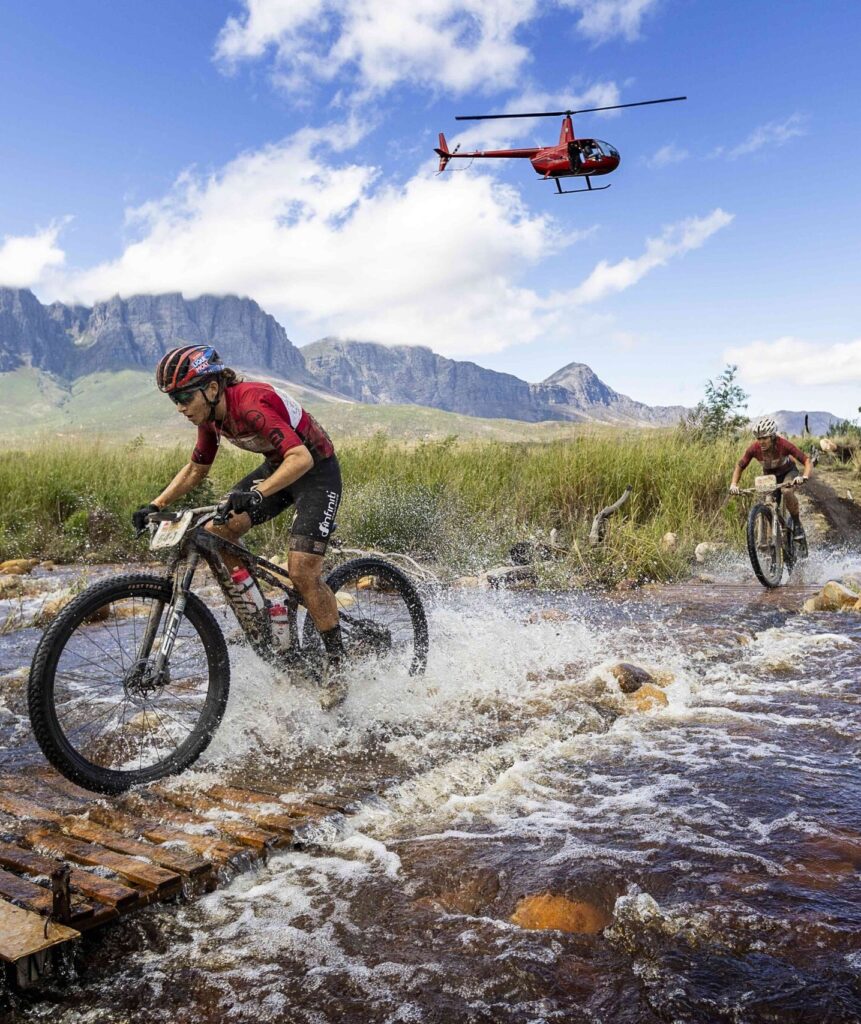
JONKERSHOEK GATE / FIRE HUT: Riders funnel through narrow forest trails; dramatic climbing and descending.
COETZENBURG TRAILS HUB: Easy access, multiple trail crossings, close to Stellenbosch town centre.
G-SPOT CLIMB: Slow, steep pinch point where gaps open and enthusiastic crowds gather.
HELDERBERG MAST: Spectacular backdrop, riders visibly suffering late in the race.
STELLENBOSCH FINISH CHUTE: High energy atmosphere, final sprints and podium drama.