

Te Water House in Graaff-Reinet is an old Karoo home that has found new life as a place where people gather. Once an antique shop, it is now a space where bread is baked, ideas are shared and a small creative community takes shape, writes IGNA SCHNEIDER.
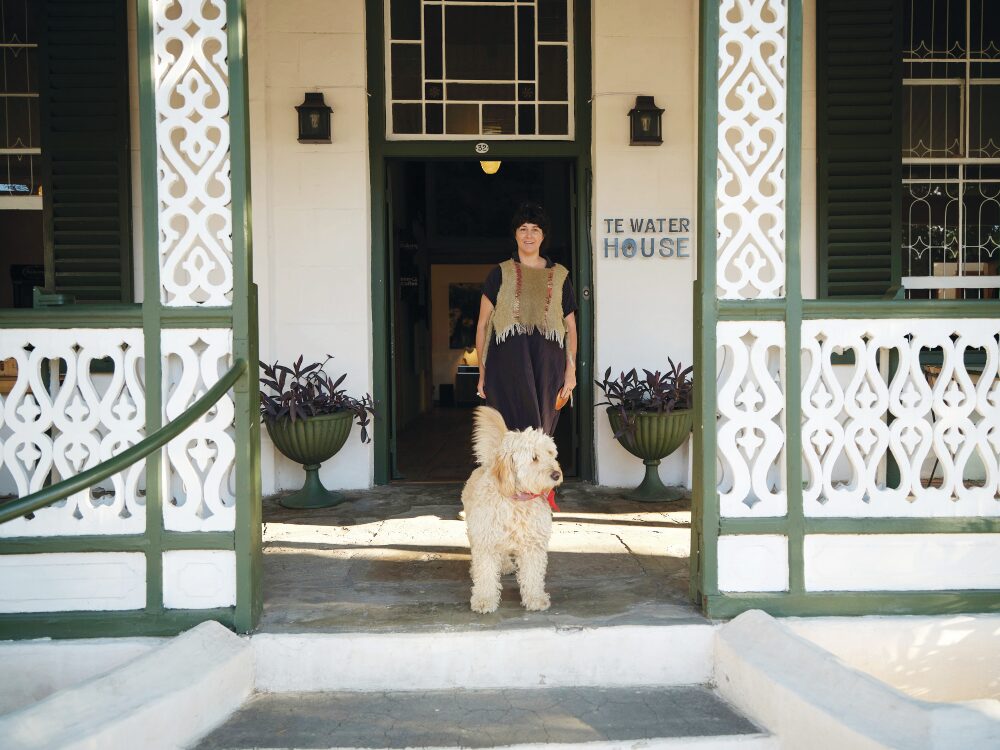
At Te Water House in the centre of Graaff-Reinet, the smell of freshly baked bread lingers as locals sit on the stoep over coffee and road-trippers stop by as they pass through town.
Jen Rubidge dips in and out of conversations, Roo, her Goldendoodle, close on her heels. It is a place where people come together easily and stay longer than planned.
Once the antique shop of Jen’s grandmother, the historical house off Church Street has been restored and reopened as a gathering place where a bakery and second-hand shop, along with a small creative tribe, bring new energy to its old rooms.
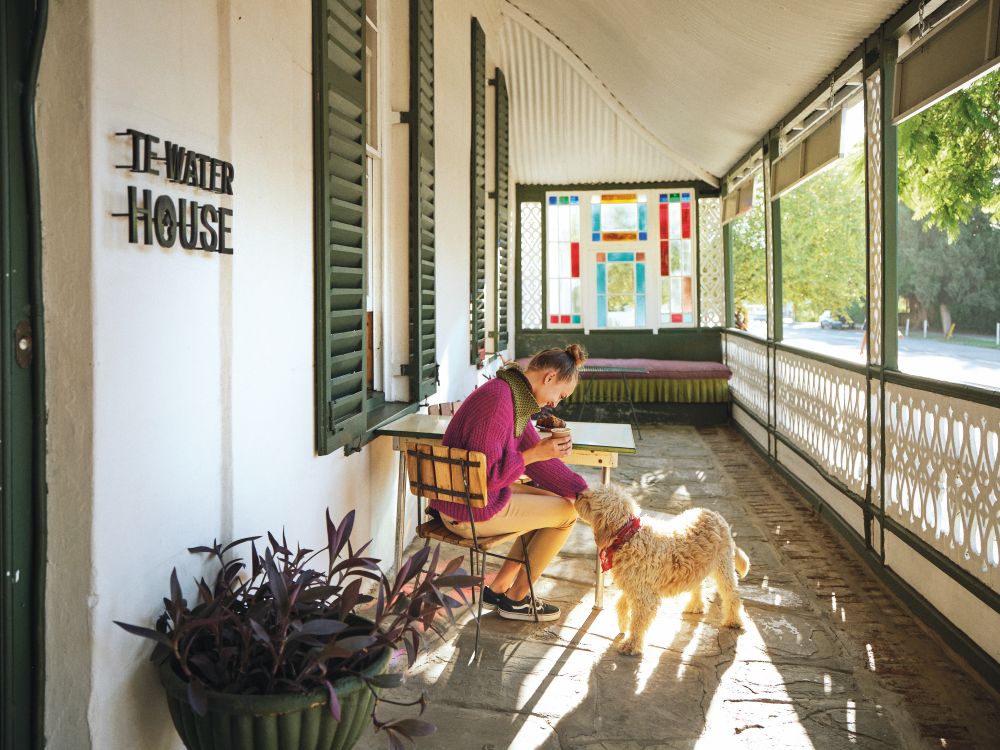
Its yellowwood beams and thick walls have seen generations come and go. Built in 1818 by Lord Charles Somerset for magistrate Andries Stockenström, the home later passed to the Te Water Naudé family, whose name it still carries. Over time, other Karoo families left their mark here, before Eira Maasdorp acquired the property some 40 years ago and ran her antique shop from its rooms.
The sprawling old house started whispering to Jen while she was sorting through her grandmother’s antiques for an auction.
“As we were moving through it, dusting her off, the old dame started chatting to me. We were opening doors I had never seen before, discovering rooms I didn’t even know were there.”

It was in that process that the idea took hold. “I started imagining what we could fill her with,” Jen says. “She was just too beautiful and held such a calming energy.”
When the auction was over, Jen shared her ideas with her family. “They said I had to give it a try.”
Eight months of restoration followed. The work was careful rather than dramatic, guided by the structure itself. Yellowwood floors, beams and ceilings were revealed, rooms cleared and the building was allowed to breathe again.
A year on, the house has settled into a new rhythm – light-filled and in use.

What has taken shape is a space defined by people as much as by the building itself. The bakery draws locals and visitors in from the street. Your Local Pantry’s shelves nearby are stocked with grass-fed beef, Karoo lamb from the Camdeboo, organic vegetables and goat’s milk cheese, while the Little Victory thrift store continues the circulation of objects.
Lot 44, Jen’s own mid-century furniture store, sits alongside an eclectic mix produced by local designers: textiles and clothing made of mohair and wool, each adding to a growing sense of exchange within the house.
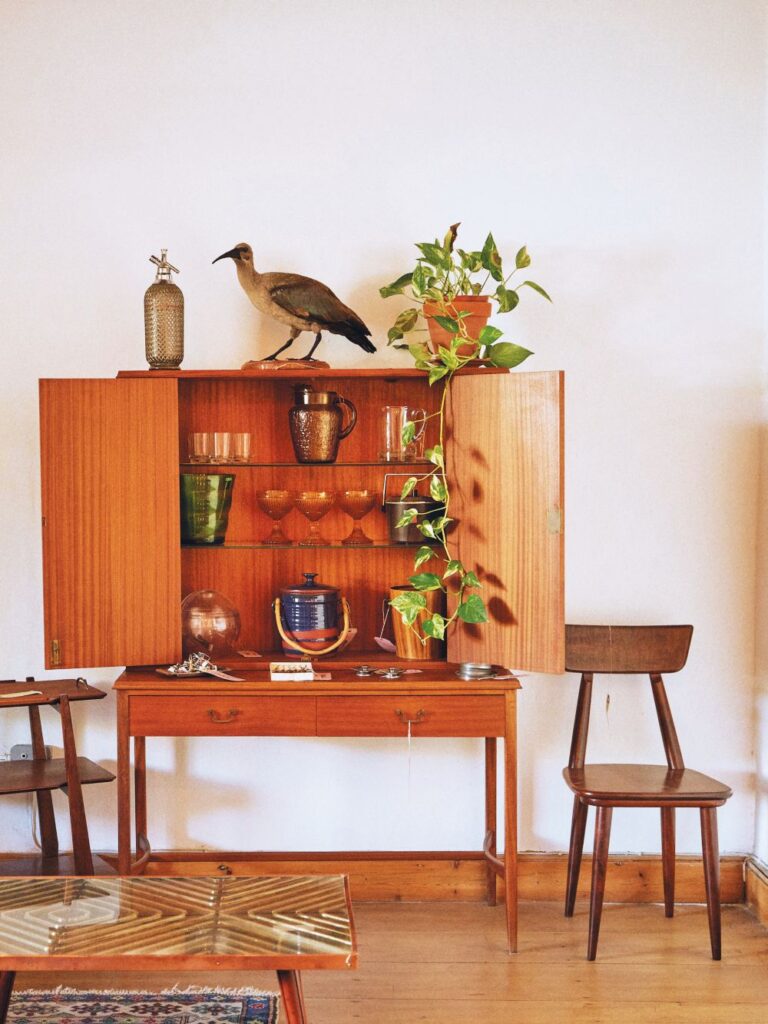

The space is also used for workshops, cultural events and exhibitions.
For Jen, it is a place to connect. Somewhere locals and visitors meet, where ideas can be explored and where local artisans and creatives can find a foothold in the town.
“I wanted to establish a platform for small creative businesses to grow and where ideas can be tested,” she says. “It sounds simple, but in Graaff-Reinet it fills a gap.”
There is, too, a continuity that runs beneath it all. Jen grew up on Wellwood farm, surrounded by many generations of family history and the fossil collection assembled by her great-grandfather, Sidney Rubidge. At the time, she says, it felt ordinary. Only later did she understand the weight of it.

That sense of inheritance now sits quietly in the house. Not as something preserved behind glass, but as something lived.
Te Water House has become what it perhaps always was at heart: a place where people meet, linger and return.