

RICHARD HOLMES explores Madagascar’s Nosy Be island, where lush forest
borders warm blue sea, the scented air is balmy and lemurs peer out at passers-by.

To think I almost walked right by them. Then again, it’s easy to get distracted on Nosy Be. It’s the largest island of an archipelago scattered off the north-western coast of Madagascar, and from it there’s never a shortage of glorious views. As we walked along the forested path through Lokobe National Park, my gaze was firmly on the Indian Ocean to my right. Here, lush slopes tumble into an impossibly blue sea, where fishing dhows tack against the monsoon winds blowing out of the north-west.
Luckily, the walking guide who joined us at the park office had his eyes on the forest canopy and quickly called us to a halt. I turned my gaze to the boughs, where six pairs of avocado-coloured eyes stared down at me from faces as black as coal. I had been on Nosy Be barely an hour and already we had found our first lemurs.
When it comes to African tourism, Madagascar has long been something of an outlier, its outdated infrastructure and a lack of luxury options keeping numbers low. That’s still partly the case, though in the past decade a clutch of boutique operators has made the world’s fourth-largest island more accessible.
Most travellers start in the highland capital of Antananarivo, a ramshackle yet charming city that mixes French finesse with Malagasy flavours. Visit the rebuilt Rova palace and wander vibrant city markets, but also tap into the city’s surprisingly good galleries and design-led boutiques.

From ‘Tana’ the choice is yours. Head south-west for baobab forests, Isalo’s canyons and the fishing villages of Ifaty and Anakao. To the west, the otherworldly Tsingy de Bemaraha rises in limestone cathedrals and knife-edged ridges. East brings you to Île Sainte-Marie and fly-in lodges that offer the last word in Robinson Crusoe-style luxury. But wherever they may go, travellers – myself included – arrive with the hope of spotting Madagascar’s enigmatic, endemic lemurs.
Heading north, you’ll be hard pressed to find a more appealing island than Nosy Be. There’s a cacophony of tuk-tuks and scooters on the streets of Hell-Ville, the largest town, as we drive through to Lokobe, but you could easily escape to quieter parts. Constance Tsarabanjina is just a few hours away by boat and promises plenty of island-style peace and quiet, while hotels on Nosy Be’s west coast offer coastal charm and a wealth of activities.
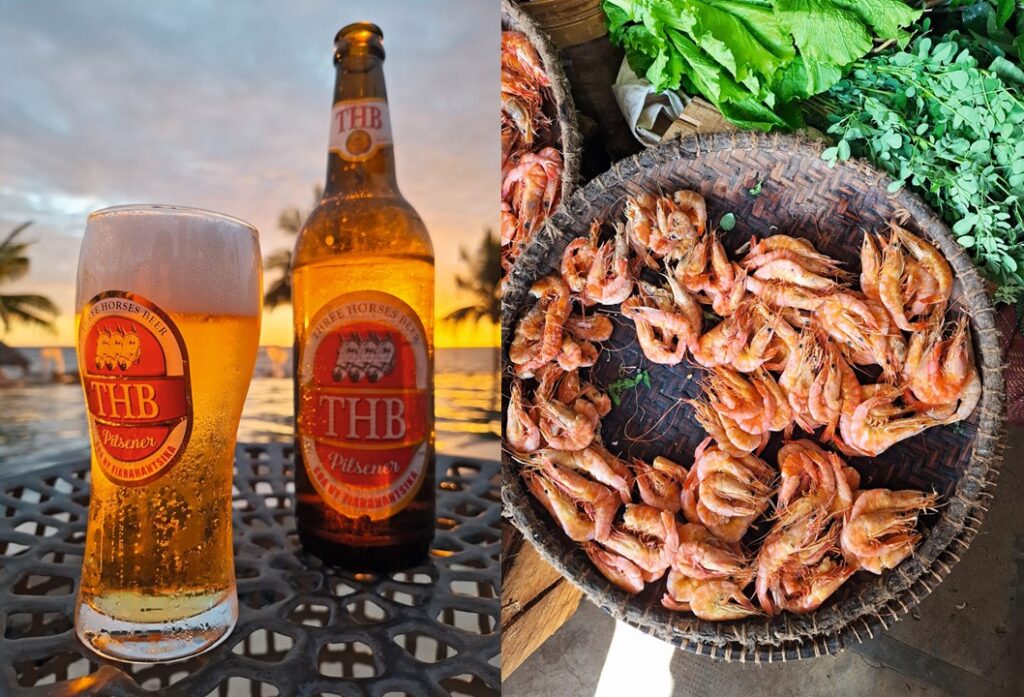
That makes the island something of a Goldilocks option, allowing you to alternate between spending time on the beach and discovering local colour, from historic landmarks to markets where baskets are packed with wild-caught prawns and the scent of fresh vanilla hangs heady in the air. Unlike Mauritius, where the experience can feel somewhat sanitised, Nosy Be wears its dusty, bustling heart on its sleeve.
It’s an island with plenty of history too. It’s home to one of Madagascar’s oldest Catholic churches, while the lateen sails of fishing dhows and the island’s mosques – the oldest dating to around 1700 – tell of the Islamic traders that have long sailed these waters.
Drive the ring road that runs through lush hillsides and you’ll marvel at the ostentatious yellow and green flowers littering the roadside, vagabonds that have escaped from the island’s ylang-ylang plantations. Nosy Be is famed for producing a significant share of Madagascar’s ylang-ylang – a key ingredient in perfumes – and although today the industry is much diminished, it is still possible to stop in at working distilleries to learn more about this fragrant essential oil.
On the road to Lokobe, Société des Produits à Parfums de Madagascar delves into the island’s distilling history. Adjoining it, a wildlife park offers close-up encounters with an array of island wildlife.
The experience is a little wilder in Lokobe National Park. There, a trio of steep walking trails will test your resolve in the high humidity, but are worth the effort to explore both the idyllic coastline and the tropical forest. And as I discovered, for the best chance of spotting the three species of lemur found here – black, mouse and sportive – you’ll want to request a guide, who can lead you down tiny forest trails in search of lemurs, birds and Henkel’s leaf-tailed geckos that can grow to 30cm long!

It’s hard work hiking up humid mountain paths, though, so by evening I’d found myself on the golden sands out front of the Palm Beach Resort & Spa, a cold ‘Three Horses’ beer in hand. West-facing for the sunset and with gloriously warm waters begging for a swim, it’s an excellent base for exploring the island.
The next morning I was up at sunrise, ready to hop onto a high- powered speedboat for the 50km, 90-minute journey to Nosy Iranja.
If you ask ChatGPT to conjure up an image of the perfect tropical isle, it might just come up with this one: two forested islands linked by a spit of blinding white sand that is swallowed twice a day by the rising tide. But visit Nosy Iranja at low tide and you can meander the kilometre-long isthmus and take a dip in the rising tidal water. After lunch – beachfront restaurants serve up platters of local lobster, fish and prawns – hike the hill beyond to the colonial-era lighthouse for panoramic views.
On the way home, sit back and watch fishing dhows tacking out to sea for the night, their hand-sewn sails billowing in the freshening wind.
My days on Nosy Be roll by in familiar fashion, ebbing and flowing like the tides as I blend days on the beach with exploring the islands.
The next day, just 20 minutes from Palm Beach, our outrigger speedboat slows to an idle and we jump overboard with masks pulled tight. Though there’s no coral in this corner of the archipelago, the sandy beds and sea grasses of the Ambohibe Turtle Reserve attract hungry green turtles that don’t mind snorkellers swimming alongside them.
On my last evening, I took a ride to the summit of Mont Passot, the high point of Nosy Be, for glorious views out over the archipelago and a real sense of the volcanic history of these islands. Speak nicely to the driver and he’ll point out some of the 12 lakes on the island, all of which are home to healthy populations of Nile crocodiles.
The road winds upward through teak forests and past smallholdings planted with a cornucopia of fresh produce. At the summit, a babble of languages showed the global appeal of Nosy Be. In the last golden glow, it wasn’t hard to see why. On this island of ylang-ylang-scented air, I’d found easy days, warm seas and a steady run of small discoveries. And, of course, the lemurs I’d been hoping for.

MADAGASCAR’S AFRICAN CAVIAR
In the highlands of Madagascar, far from the coastal resorts and rainforest reserves, a pioneering aquaculture project has quietly placed the island on the global luxury map.
Rova Caviar was established in 2017 and is Africa’s first and only producer of farmed sturgeon caviar. At an altitude of 1 400m, in the pristine waters of Lake Mantasoa, a variety of sturgeon species are raised in dozens of open-water pens to produce a choice of caviars.
The result is a delicacy that now graces the menus of high-end restaurants across Europe and South Africa, where the Kasnodar brand is especially popular. Beyond its gastronomic credentials, Rova represents African and French innovation, and is a reminder that the island’s luxury story goes far beyond its famous beaches and baobabs.
TRAVEL ADVISOR
GETTING THERE: Airlink offers one direct flight per week from Johannesburg to Fascene Airport on Nosy Be, as well as four flights per week to Antananarivo. Domestic flights connect daily to Nosy Be.
WHERE TO STAY: Palm Beach Resort & Spa on Nosy Be’s west coast. If you’re visiting ‘Tana’, the Radisson Blu Antananarivo Waterfront is just 30 minutes’ drive from the airport and the smartest address in town.
VISA: South African passport holders can obtain an eVisa before departure (from $10) or a visa on arrival.
Visit evisamada-mg.com.