

On the Wellwood farm near Graaff-Reinet stands a building that once was a milk shed. In 1956 it became a fossil museum. And now it’s a workshop where an ancient landscape is celebrated in a new way, writes IGNA SCHNEIDER.

Between the walls of the Wellwood sheep kraal stands a small gabled building that has had more than one life. First it was the farm dairy. Later it was transformed into a home for the remarkable Rubidge Fossil Collection. And now, Anika Lötter is at work here.
For decades, the old Dexter dairy held Sidney Rubidge’s fossil collection. Its glass cabinets were filled with hundreds of skulls that drew scientists and visitors from around the world.
After almost a century of being curated by four generations of Rubidge farmers, the fossils have now been moved from Wellwood to Karoo Origins – The Fossil Centre in Graaff-Reinet. There they continue to tell the story of how a farmer’s discoveries changed our view of prehistoric life.
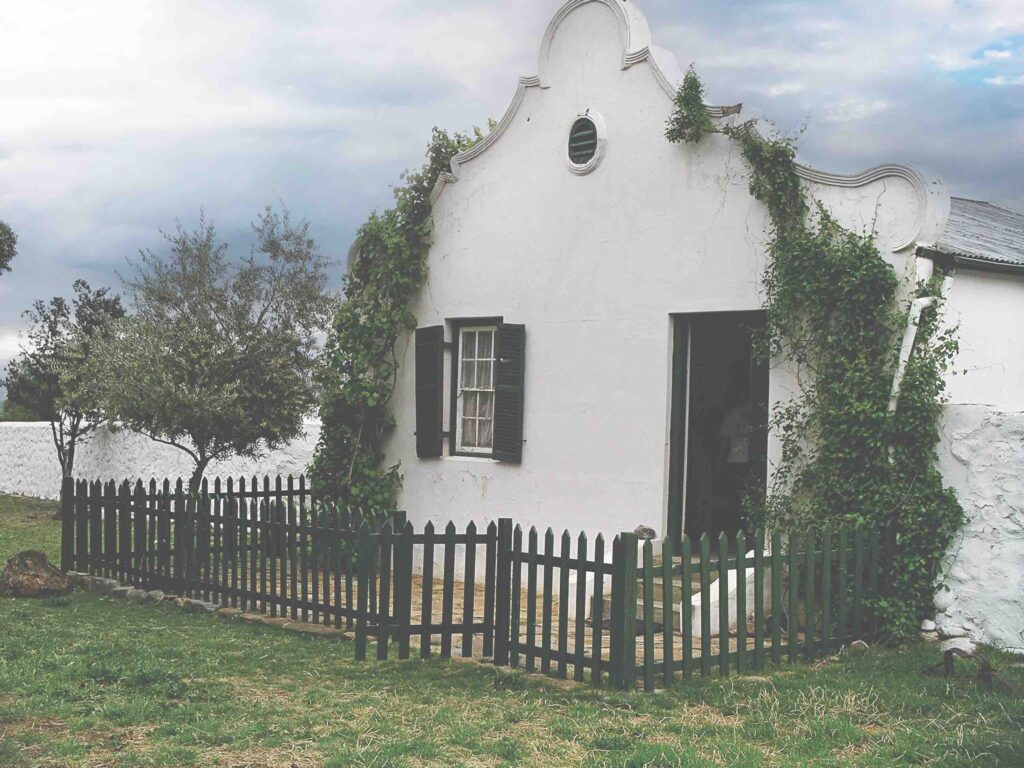
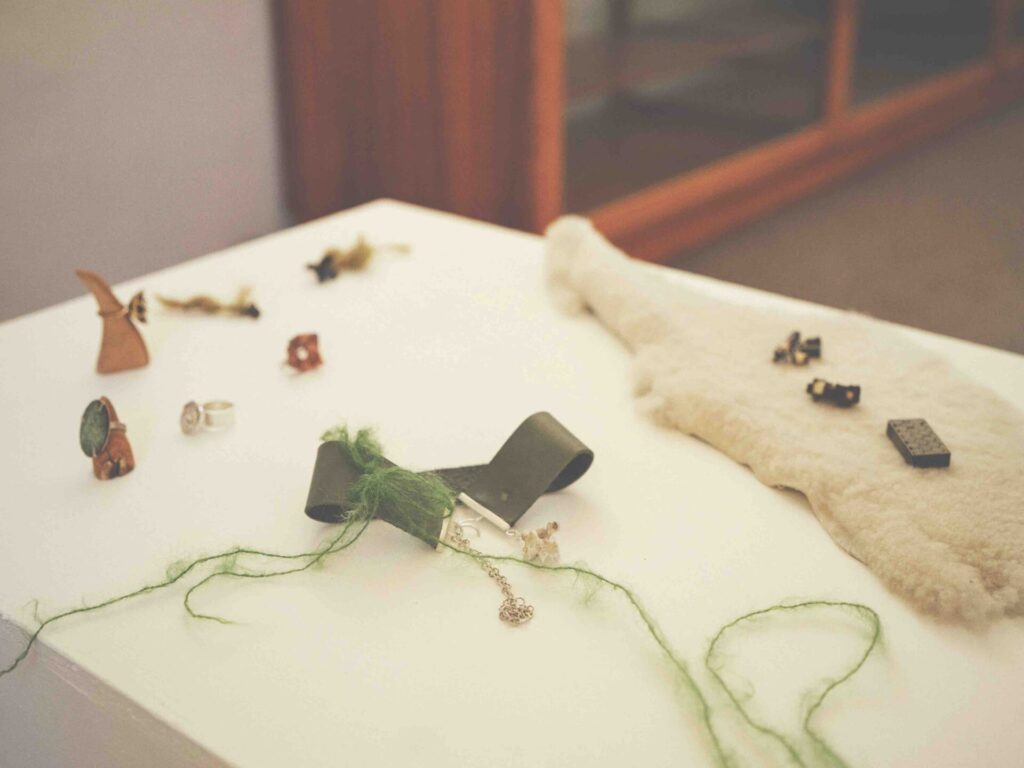
The purpose-built display cabinets, lined with red felt, remain on Wellwood. But what they hold now is different.
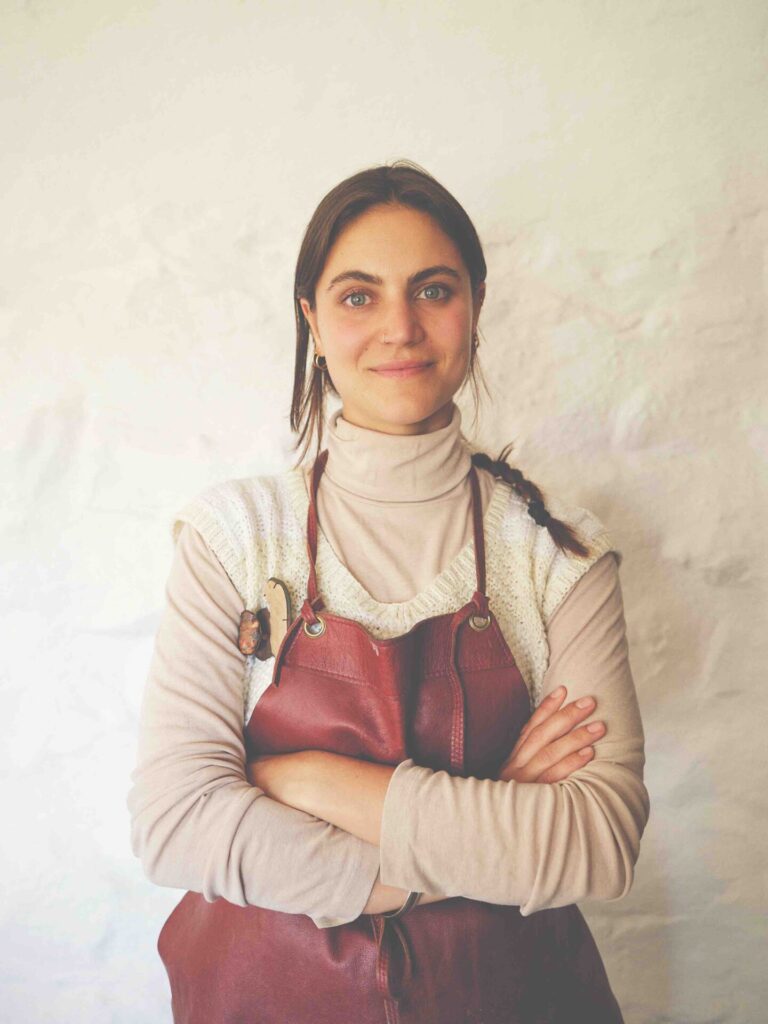
At her bench, Anika works with a small blowtorch, heating and shaping brass, turning it carefully with a pair of tongs. She wears a leather apron, bent over her work. Files and pliers lie within reach, alongside a chisel and saw.
Around her are her materials: a lock of mohair, a twist of wool, pieces of rock and wood, seeds, scrap metal. Behind her, her work rests in the old glass cabinets. A playlist runs quietly; through the window, a flock of merinos moves towards the kraal.

In 1956, Sidney Rubidge, farmer turned fossil-hunter, wrote, “Possibly the first impression a visitor would obtain of my little ‘museum’ is the sheer incongruity of its very existence on a Karoo farm, where normal activities concern themselves with the breeding of merino sheep.”
For Anika, the little museum belongs here.
The young jewellery and textile designer married into the Rubidge family a year ago. Her husband Richard – great-grandson of Sidney – is the sixth generation to farm Wellwood.
Her own story goes back to a mohair and wool farm near Pearson in the eastern Karoo, where the Lötters have been farming for seven generations. “It sounds like a long time,” she says, “but here it isn’t. Not if you consider that the fossils in this area date back 250 million years.
“When I was a little girl, my dad would take me out for drives in the veld. He’d show me the plants the animals like, the sweet ones. Riding on horseback, I would help bring in the sheep for shearing. I’d hear that we need rain. My sister and I would play in the river and make vases from clay for our boma, decorating them with grasses.”
It feels natural that a child of the Karoo would go on to create from it. After finishing school in Bloemfontein, she studied visual arts at Stellenbosch University, where her interest in Karoo materials began to take shape. “While I was studying, I started working with natural elements from the Karoo and became interested in the fossil history of the area,” she says. “The more I learnt, the more my idea of time and place began to shift.”
She completed her master’s degree in 2024 and returned to the Karoo, settling into the old fossil museum on Wellwood. The connection was immediate. “It felt like a full-circle moment.”
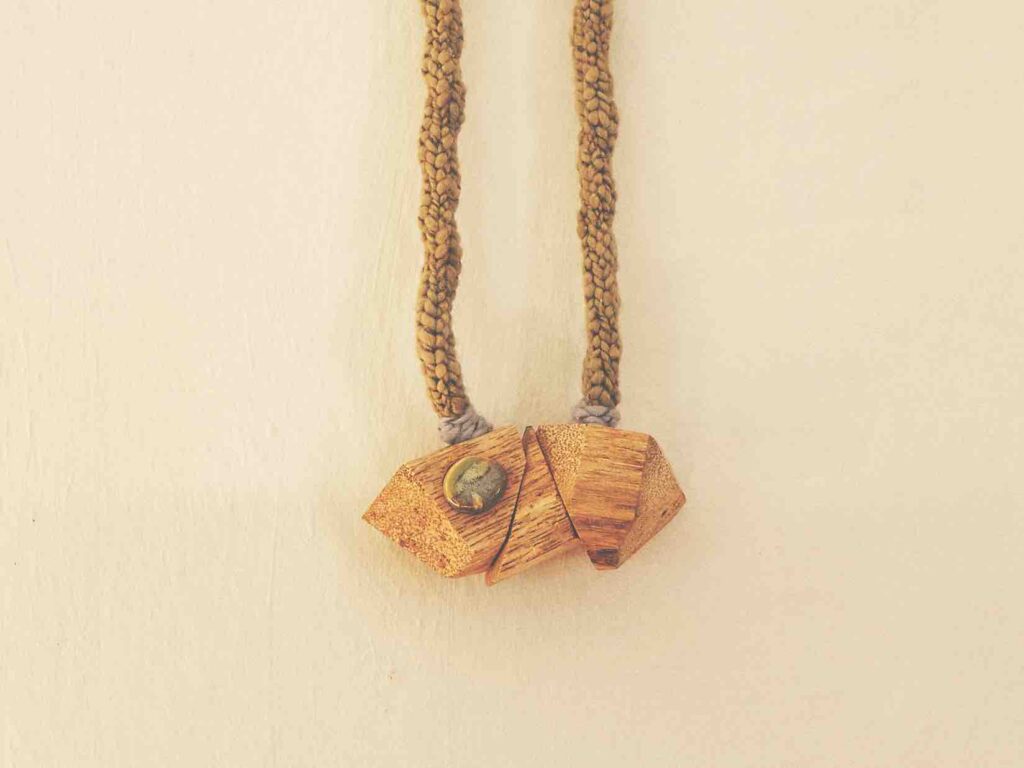
Her work follows what is available. Wood, shale, wool, plant material – things gathered from the farm and the surrounding veld. The pieces are shaped by the material itself, its texture and structure.
“It matters what we choose to make things from,” she says. “It changes how we relate to what we wear and how we think about where it comes from.
“I love the way natural materials hold memory and tell stories. The grain in wood records how it has grown, the crimp of wool is a diary of the animal’s health.”
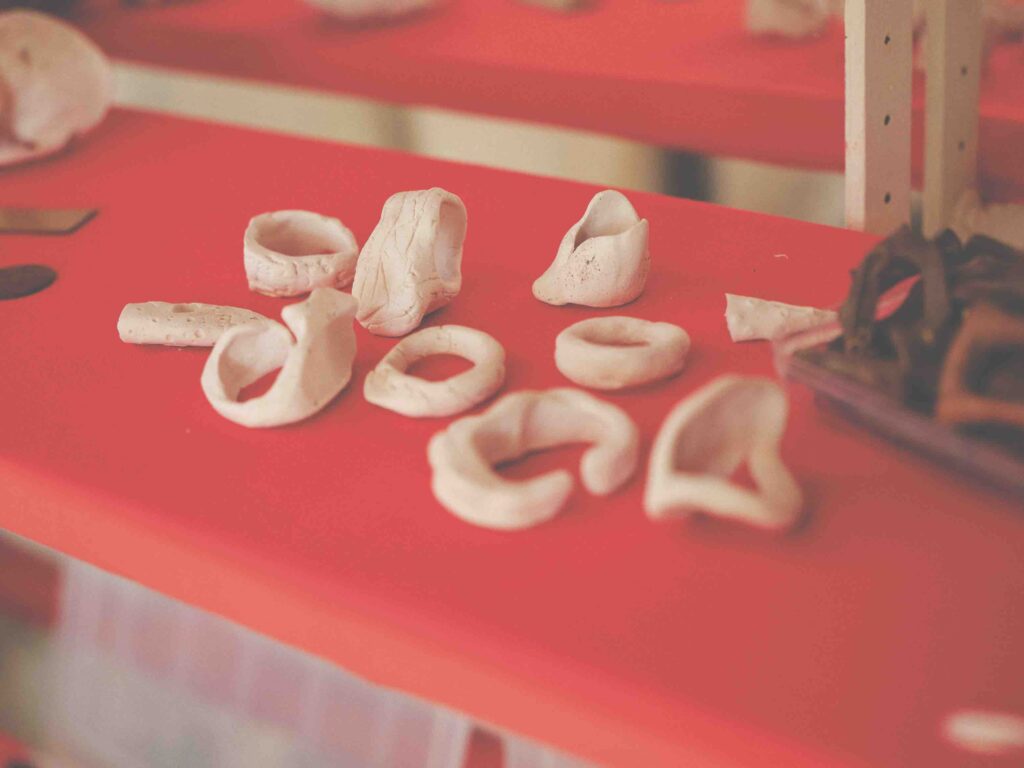
What she creates shifts with the landscape. Scorching summers leave the veld dry and stripped back. Rain brings colour. Wind carries seeds and cat’s tail grass that catch in the wool of the sheep.
“There is a deep sense of time here,” she continues. “You realise the landscape has been here long before you. I like that feeling.”
Anika believes we can choose which materials we work with, what we wear. “In today’s industrialised world,” she says, “there is something very special about creating things out of slow material in an ancient place like the Karoo.”
She is currently working on a new collection, more colourful, more wearable, with a strong emphasis on weaving and craft. It is a new body of work for a little museum that once held the story of the ancient Karoo, and now continues the story in a different way.