

What does it take to turn a university into an engine of innovation? IGNA SCHNEIDER traces the rise of Stellenbosch University’s LaunchLab – from a lunchtime pitch contest to Africa’s top university incubator – and explores how it’s quietly reshaping the future of science, entrepreneurship and impact-driven research.

A quiet revolution has been unfolding on the Stellenbosch University (SU) campus. Not in lecture halls or leafy courtyards, but inside glass-walled co-working spaces and labs, where students, researchers and entrepreneurs build companies from scratch. One of them is Este Burger.
An electronic engineer with a Master’s degree in biomedical engineering, Este is the CEO of Biocode, a health-tech startup developing diagnostic tools that detect hidden vascular damage. The company was founded by Professors Resia Pretorius, Anna-Mart Engelbrecht and Willie Perold and is based on research conducted at SU.
Este is part of a new generation of academic entrepreneurs who are turning research into real-world impact. Her journey began not in a traditional lab, but at LaunchLab, SU’s business incubation hub.
“I was shifting from research into entrepreneurship and it was all very new to me,” she says. “I had passion but little business experience.
LaunchLab gave me structure: workshops, mentoring, bootcamps. It rewired my brain towards business thinking.”
Today, Biocode’s pioneering micro-clot test (discovered in Resia’s blood lab and patented by SU) is licensed to laboratories in the United States, Switzerland and Germany.
Originally developed in response to Long Covid, the test detects tiny blood clots – emerging biomarkers of vascular damage and chronic inflammation – that are often missed by traditional tests. As research deepens, its potential applications are widening to include a growing list of chronic conditions, from cardio-vascular disease to cancer.
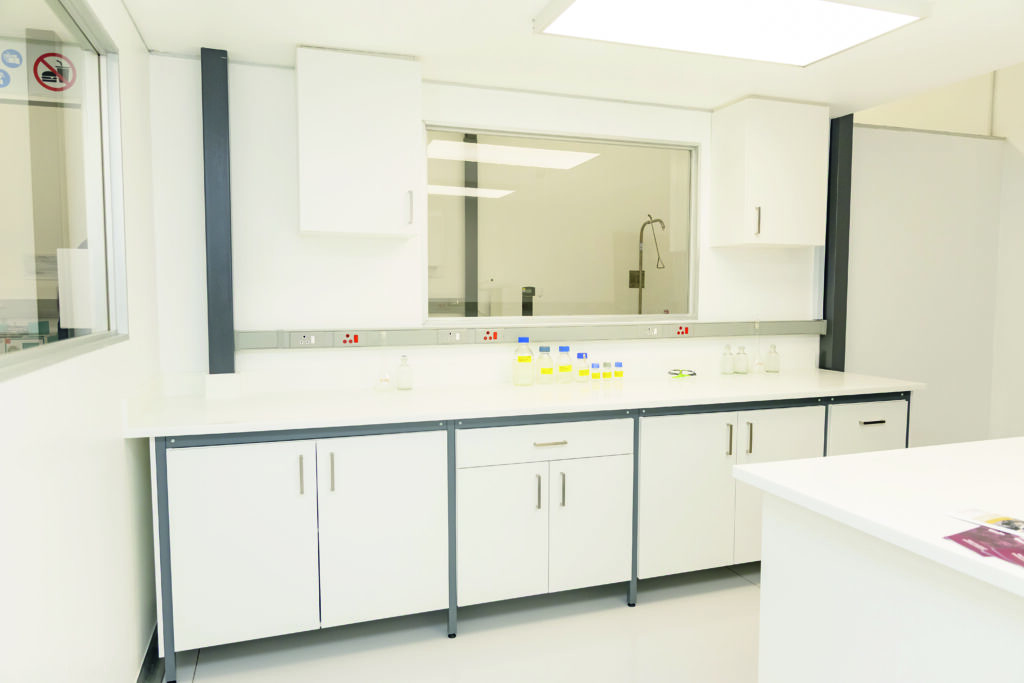
Earlier this year, Biocode took another leap forward with access to LaunchLab Ceribio, a specialised biotech laboratory and extension of LaunchLab’s services. “The new lab gives us the advanced facilities we need to scale up and develop new products,” says Este. “It enables a total commercial mindset. It’s a game-changer for our growth.”
A DECADE OF IMPACT
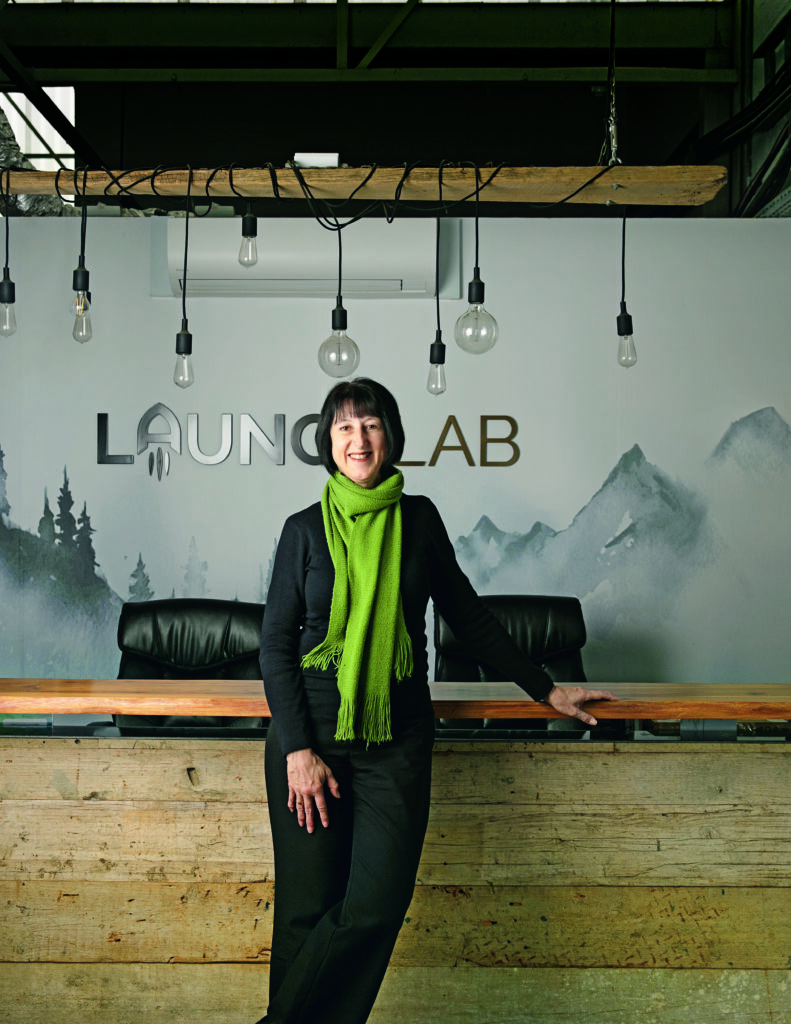
Este, as the CEO of Biocode, is one of dozens of SU students, staff and alumni who have launched companies through LaunchLab, the university’s award-winning business incubator.
Over the past decade, LaunchLab has helped nurture more than 250 startups – ventures that have collectively raised over R800 million in investment and now generate more than R1billion in annual revenue. Among these is CubeSpace, a space-tech company transforming the global satellite industry, and a frontrunner to becoming Africa’s first university spinout unicorn (a startup valued at more than US$1 billion).
“Our job is to nurture startups from the first spark of an idea through to investment and growth,” says Brandon Paschal, deputy director of Spinout Companies and Funds, who heads up LaunchLab. What began as a student pitch competition in 2011 has since grown into Africa’s leading university incubator, recognised twice by UBI Global.
“It started with a simple idea,” says Brandon, who joined LaunchLab in 2015. “Back in 2011, the university threw together a lunchtime pitch competition at the Neelsie – just to see what would happen. We had little entrepreneurial focus on campus, so the thinking was: let’s go to grassroots level and see what’s out there. The volume and quality of ideas made us realise: there’s something here.”
That seed grew quickly. Within two years, LaunchLab had evolved into a structured support ecosystem. By 2013 it was formally established, operating from a 400 m2 basement under the Admin A building.

“We were right next to the Rooiplein, bang in the middle of campus. We had this small sign on the door and people started walking in. The guys from Freedom of Movement, just graduated, were some of the first. Soon researchers joined. Ideas were turning into businesses. Interest and excitement were building. A movement was waking up.”
Two years later, LaunchLab and six startups moved into a revamped 1200m2 warehouse near the Facilities Management Building and, within four months, the space was buzzing with founders, mentors and hot-desk energy.
“Today we support three types of entrepreneurs,” Brandon says. “University spinouts where SU holds equity, student-founded startups based on original ideas, and external entrepreneurs who want to embed in the LaunchLab ecosystem.” Over time the community has expanded to include high-growth ventures like Spatialedge, ButtaNutt and MellowVans in addition to spinout companies like CubeSpace, Biocode and Fluorobiotech – entrepreneurs drawn to the culture, connections and credibility the space offers.
In parallel, LaunchLab has partnered with corporates such as Nedbank, Santam, Mercedes-Benz and MultiChoice to run 11 innovation challenges, offering students and founders exposure to real-world problems and market opportunities.
“Our programmes range from student idea accelerators to spinout support and fund management. Our model is sector-agnostic, but tuned to help university-born ventures thrive, especially in complex fields like agri-, health- and green-tech,” Brandon says.
THE BIGGER PICTURE: INNOVATION AT SU
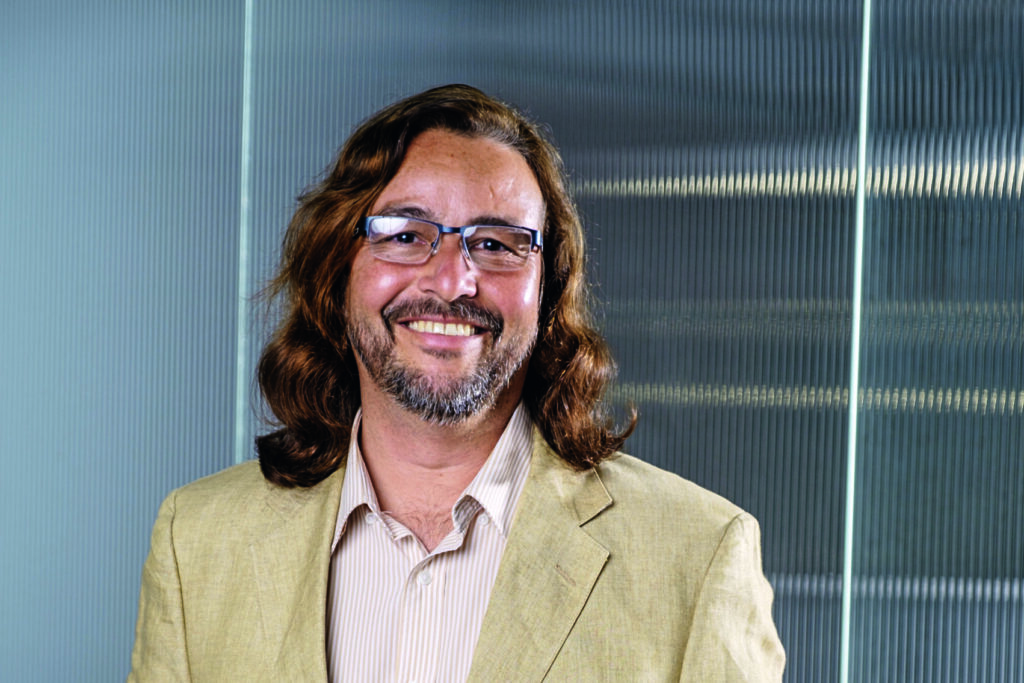
Anita Nel, chief director of Innovation and Commercialisation, says LaunchLab is an essential piece of the university’s innovation puzzle. It operates under Innovus, the technology transfer and commercialisation office. Innovus manages the continent’s largest university-owned IP portfolio and plays a strategic role in helping research escape the lab and reach the market.
“Having a fully fledged incubator on campus changes everything,” says Anita. “You can’t really commercialise university research without infrastructure that supports early-stage ventures. LaunchLab provides that: not just office space, but legal scaffolding, mentorship, funder networks and a dynamic community.”
It’s a model that’s working. Between 2011 and 2015, Innovus averaged just one spinout a year. But with LaunchLab fully operational, that number quickly jumped to four to six annually. Today, Innovus holds equity in 37 spinout companies – 10 of them in biotech, with more in the pipeline.
BIOTECH TAKES ROOT
The newest addition to the ecosystem is LaunchLab Ceribio, a specialised laboratory that supports the university’s growing cohort of science-based startups. As more ventures emerge in fields like diagnostics, agri-biotech and health-tech, the demand for top-tier lab space and tailored incubation support has surged. Ceribio fills that gap, offering the critical infrastructure young biotech companies need to move from research to real-world application. Biocode is among its first tenants, alongside deep science startups Fluorobiotech and PhagoFlux.
“We have an incredible foundation for research at SU, but we lack biotech laboratory incubators that can convert our world-class research into products,” says Prof. Tulio de Oliveira, director of the Centre for Epidemic Response and Innovation (Ceri).
Tulio, who played a key role in identifying the Beta and Omicron variants of SARS-CoV-2, believes facilities like Ceribio are vital to Africa’s future.
“If the Covid-19 pandemic taught us anything, it is that we can’t rely on imported solutions. We led the world in the discovery of variants, but we were at the back of the queue to access vaccines and medicine. That is one of the reasons we are investing in this lab – to position South Africa as a global leader in the production of biotechnology products that save lives.”
LOOKING AHEAD: BEYOND THE LAB
For Anita and her team, the opening of Ceribio is the pinnacle of LaunchLab’s first decade – but also just the beginning. Plans are under way to expand the model at The Bridge, a future smart-city development outside Stellenbosch. The vision is ambitious: to build a world-class biotech and deep-tech hub that sparks innovation not just in South Africa, but across the continent.
“We want every student and researcher with a transformative idea to know: if you want to turn it into real-world impact, this is the place to do it,” says Anita. “We’re building a blueprint for Africa’s knowledge economy – and we’re only getting started.”
It’s a quiet revolution – but its momentum is undeniable.
WHY BIOTECH BELONGS IN STELLENBOSCH
When Prof. Tulio de Oliveira speaks about the future of biotechnology in South Africa, he doesn’t hedge. “Stellenbosch is the one place where this can really happen,” he says. “We have a world- class university, a well-run city, access to investors and an entrepreneurial culture. It’s the perfect place to grow a biotech industry for Africa.”
Tulio is no stranger to high-stakes science. A globally respected bioinformatician and virologist, he played a central role in South Africa’s genomic surveillance efforts during Covid-19. His team at Ceri (the Centre for Epidemic Response and Innovation) was among the first in the world to detect and sequence new variants of the SARS-CoV-2 virus, placing South Africa in the top three globally for genomic surveillance.
“The world was surprised,” he says. “They didn’t know we had this level of scientific capacity.”
But while South Africa led the world in basic medical science during the pandemic, it lagged behind in turning that knowledge into solutions. “We were the fastest to identify variants, but we didn’t produce the diagnostics, therapeutics or vaccines. We were at the back of the queue when it came to accessing vaccines. That exposed a major gap – the need for investment in translational science.”
Translational science is the bridge between academic discovery and real- world application. And closing that gap is exactly what LaunchLab Ceribio, Stellenbosch University’s new biotech incubator, is designed to do.
Launched this year as an extension of LaunchLab’s innovation ecosystem, Ceribio provides biotech entrepreneurs with access to an industry-grade lab environment. It’s not just a workspace – it’s a crucial missing link. “You can’t commercialise biotech in an academic lab,” Tulio says. “You need advanced Good Laboratory Practice facilities, compliance systems and a culture of deep scientific collaboration to turn discoveries into products that can enter the market.”
Ceribio is already at capacity, with four startups operating out of the facility.
One of them, Fluorobiotech, has received more than R15 million in investment from Ceri to begin local production of enzymes for genomics and vaccine development. “This shows how hungry the sector is for space and support,” says Tulio. “We’re already planning an expansion and, after that, phase 2.”
Phase 2 will be housed at The Bridge, a smart-city development between Stellenbosch and Paarl. The vision is to establish a campus of industrial-grade biotech labs and incubators compliant with international ISO standards. It will be the first facility of its kind on the continent and Ceri is looking for collaborative partners to help realise that goal.
For Tulio, this is not just about scientific advancement – it’s also about economic transformation.
“Biotech can create multibillion-dollar industries. Globally, it’s a high-risk, high-reward sector, but when it works, it changes everything. Biotech is only deeply developed in a handful of hubs, like Boston and San Diego in the USA, where ecosystems formed around MIT and Harvard. Stellenbosch could be that for Africa.”
He also believes Ceribio can play a role in reshaping how young scientists see their future. “We want to show students that when you study science, you’re not just training for academia.
You’re building the foundations to start companies, create jobs and solve real problems.”
It’s a bold vision, but one already in motion. And if Tulio is right, the next generation of biotech breakthroughs won’t just be made in South Africa – they’ll be built, scaled and exported from Stellenbosch.