

Indian businessman ‘BAS’ Singh describes to EMILE JOUBERT how Franschhoek became a spiritual home to him and subsequently to the Leeu Collection, his hospitality group.
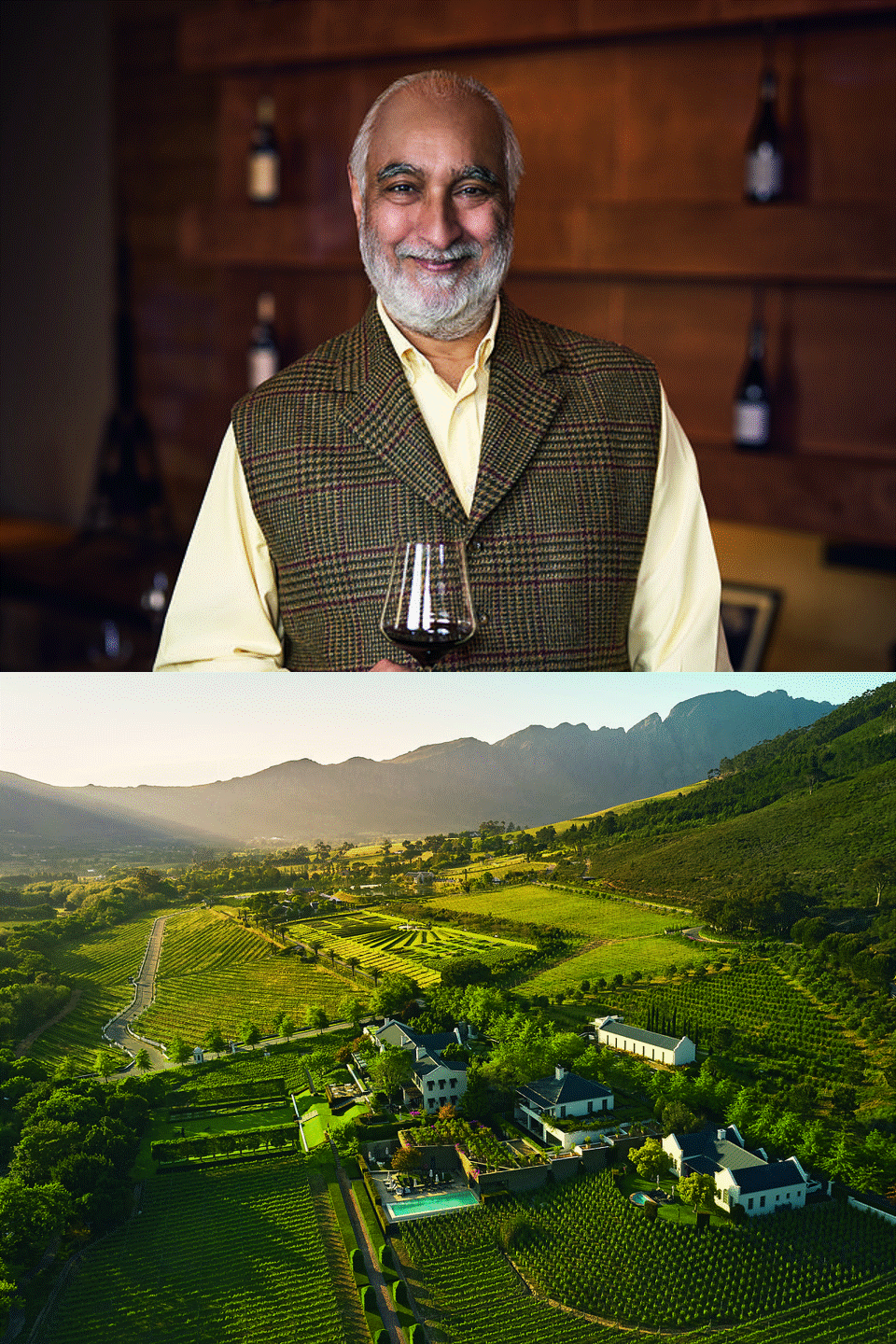
From his home on Leeu Estates set on the Dassenberg Mountains outside Franschhoek, Analjit Singh looks out of a large window facing north-east, basking in the radiant energy of a late morning sun. For most of the morning Analjit, or BAS (Bhai Analjit Singh), has been talking in his modest, quiet tone about his journey to becoming a business owner and resident in Franschhoek, a journey that began with his first visit to South Africa 16 years ago. Now, gazing out over the Franschhoek Valley, BAS sums up his feeling for the town and the surrounding region he has come to call home.
“It has been 16 years since I first set foot in Franschhoek,” he says, nodding towards the open sky and the low sun. “Maybe a short time by today’s scheme of things, but long enough for it to have made such an impression on me that I can now truly call this wonderful place ‘home’.”
The first time was a Monday in July 2010. The then New Delhi-based businessman with global commercial interests had never visited the African continent, nor ever really planned to do so. But in 2010 the little matter of the FIFA World Cup tournament was happening in South Africa and his sports-mad teenage daughter Piya twisted her father’s rubber arm in her wish to experience the event. He relented, accompanying her to the final match in Johannesburg.

“It was to be a quick in-and-out visit to the country,” BAS recalls, “but some of my Indian friends said that as I was going to be in Johannesburg, I should really pop down to see Cape Town. This was not part of the plan, but on a whim, we flew down. And as I was only going to spend a short time in the Mother City, staying at the Waterfront, I requested a driver to, well, show me around.” The route took BAS and Piya around the usual scenic Cape Peninsula before the driver-cum-guide – “Mr Gerhard Michaels,” remembers BAS – headed north-east into the Winelands.
“Of course, I didn’t have a clue of where we were going, or whether Franschhoek was even on the itinerary,” he says. “But as we neared the village itself, I felt a gradual awareness dawning that there was something exceptional about it. The cradle of mountains, the slopes with the gnarled vines in their winter sparseness and the peaceful charm of the valley … this all had an unexplainable effect on me.
“Something was awakened by being in a place of a unique nature and with its own spirit, an awareness that kindled in me a sense of belonging. I had hardly been in South Africa and the African continent for 48 hours, so the fact that I could so instantaneously relate to Franschhoek told me that I had entered a very special place. I can without the slightest doubt say divinity played a role.”
A SENSE OF BELONGING
Divinity and memory. From BAS’s first moments in Franschhoek, the village and surroundings stirred memories rooted in his childhood years when his parents and brothers, fleeing the heat of Delhi, spent a month each year in the Kashmir region of Gulmarg.
Tucked away in the Kashmir Valley and with a Himalayan backdrop, Gulmarg is situated at 3 000m above sea level. In the summer months of June and July, when BAS’s family stayed there in a modest country hotel, Gulmarg is referred to as the ‘meadow of flowers’, due to nature’s dazzlingly coloured floral brush-strokes. The landscape is also known for its verdant forests of pine trees, whistling as the crisp mountain breezes blow through them, and for the awe-inspiring, ever-present lines of the Himalayas.
“Here in Franschhoek – for the first time ever – as I climbed out of that blue Bentley I felt a sense of belonging, a sense of a place. My place,” says BAS.
Initially, the decision was to procure a house for annual visits. However, the spirit of Franschhoek that had so profoundly made itself known to BAS also kindled his entrepreneurial spark, the one that had made of him an Indian captain of industry with interests in pharmaceuticals, healthcare, property development and insurance, among others.
And this incidental, yet life-changing meeting with the Cape Winelands led to his venture into hospitality, establishing the Leeu Collection, the name originating from the Hindi meaning of Singh, namely lion, or leeu in Afrikaans.
After he acquired the Klein Dassenberg farm on the Dassenberg in November 2012 with the idea of renovating the existing farmhouse for his Franschhoek home, two more historical wine farms were added to his portfolio in the first half of 2013: Von Ortloff and Dieu Donné. Joyous Garde Wine Farm would join them in 2016.
These four properties were developed to form Leeu Estates, the hotel, restaurant, spa and winery rural retreat set on 110ha of the Dassenberg at the entrance to Franschhoek. In the village itself, the Leeu Collection also embraces the boutique hotels Leeu House and Le Quartier Français, one of the region’s best-known establishments.
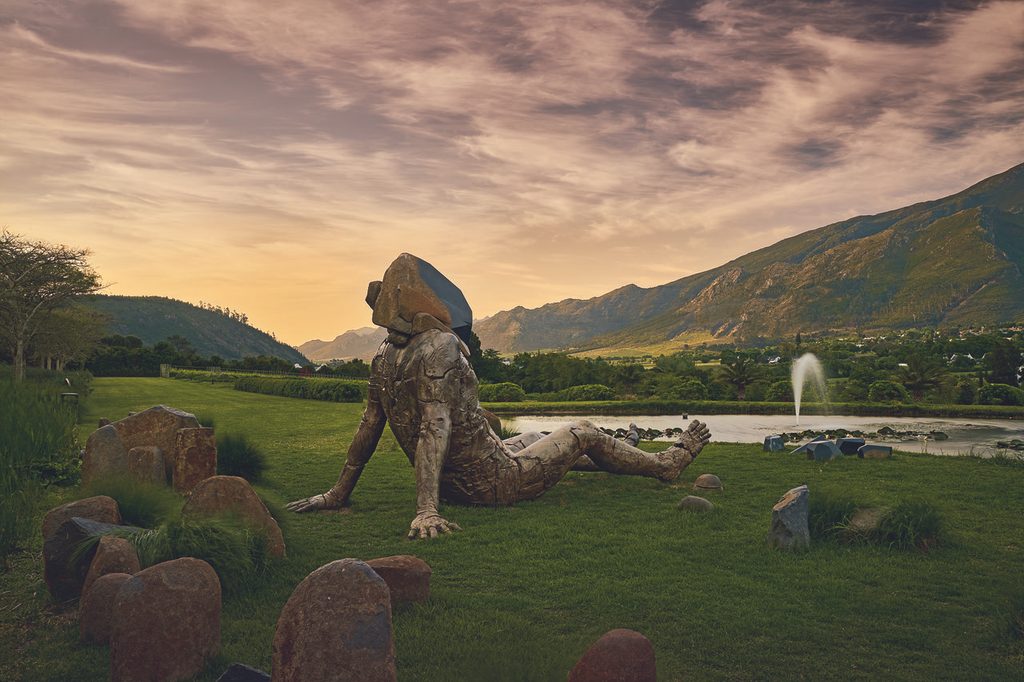
giant sculpture in bronze and Belfast granite named Reflective Resonance is found in the centre of Leeu Estates, overlooking the famous Bokkie Garden and Franschhoek’s mountains.
MAKING CONNECTIONS
BAS admits that his involvement and investment in the hospitality industry, global as it now is, would not have been imaginable two decades ago. “This business of hospitality has given me immense satisfaction, being so vastly different from what I was spending my energies on before,” he says.
“This is because hospitality is a real-time business. In other words, it is not something you manufacture and place on a shelf waiting for a customer to buy it at a later stage. In the hospitality sector, it is about an immediate connection with the customer. It is a direct exchange between people who produce and deliver, and people who receive and consume. And in doing that, one’s success depends on building a respectable proposition.”
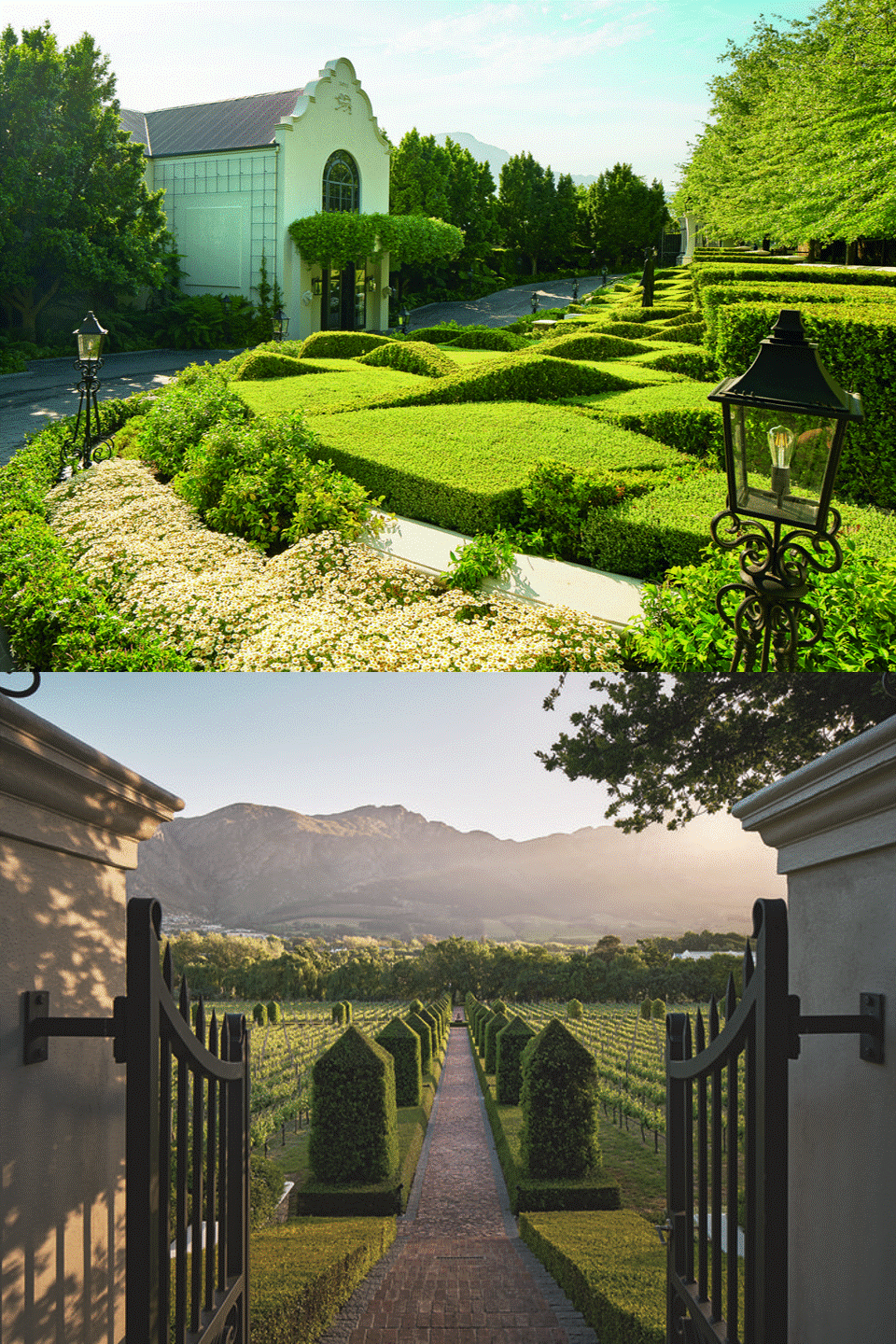
The joy the hospitality offers BAS is, however, surely surpassed by what the establishments in the Leeu Collection offer their guests. An evocative and distinctive Leeu style is omnipresent, whether at the Leeu Estates on the Dassenberg in Franschhoek, the group’s Linthwaite House in England’s Lake District or at Collegio alla Querce in Florence. Signature landscaping and art collections form part of what BAS deems as the all-important ‘sense of place’ visitors and guests must experience. Leeu Estates’ expansive gardens best showcase the Leeu Collection’s landscaping ethos, combining hundreds of trees, expansive lawns, hedges trimmed to military precision and spreads of fynbos.
And vineyards. “This is wine country, so I was not going to tinker with the vineyards, as viticulture and winemaking were here long before me,” says BAS. Thus, between the multicoloured shrubs, the rows of pin oaks and the square-cut yellowwood trees, vineyard blocks are set to accentuate the atmosphere of a working wine farm. “I want guests to feel the vineyard roots growing beneath their feet,” says BAS. For wine, Leeu Estates is also home to the Mullineux and Leeu Family Winery, where the renowned Leeu Passant range of wines is made.
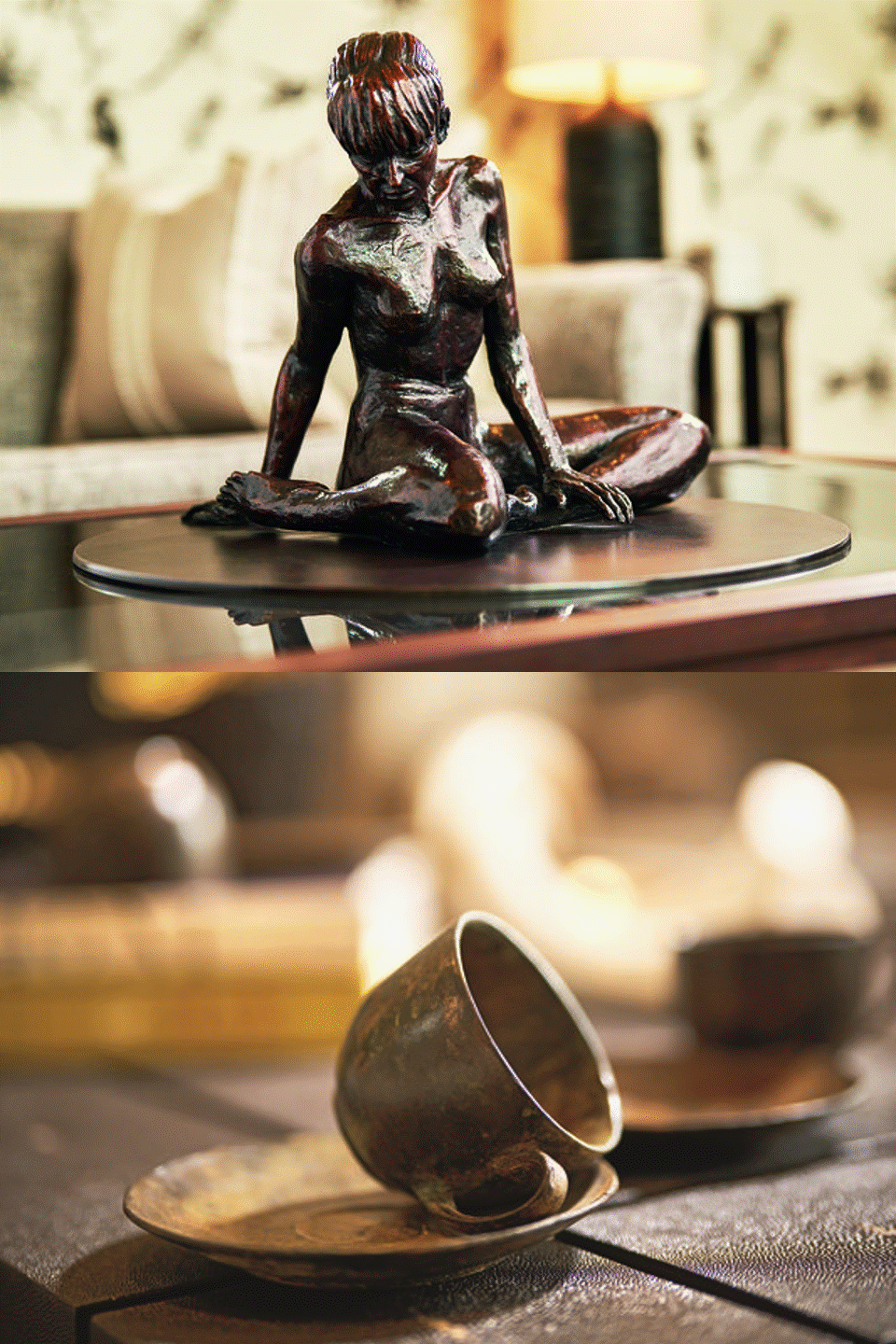
Art begins outside in the gardens, between the vineyards and the trees. Expansive sculptures by, among others, Angus Taylor, Deborah Bell and Guy du Toit add allure and intrigue, while original artworks adorn the interiors.
“From my first introduction to South Africa, I was overwhelmed by the brilliance and diversity of the artistic expressions originating from the nation’s multifaceted, yet collective soul,” he says. “The range and quality of art is phenomenal.”
His commercial and personal involvement with the local art world has led to partnering famed South African art house Everard Read, with Everard Read galleries found on Leeu Estates and at Le Quartier Français. Spurred by the spirit of the hospitality industry he found in Franschhoek, BAS led his Leeu Collection to owning and operating hotels in the UK Lake District (Linthwaite House) and Florence (Collegio alla Querce). But the foundations are firmly rooted in Franschhoek. “Something I keep thinking about,” says BAS, once again looking out over the valley from his window, “is that I feel just as happy and blessed as I did on that very first day arriving here.”
A new home, perhaps, but one where it seems that the heart has always been. V